


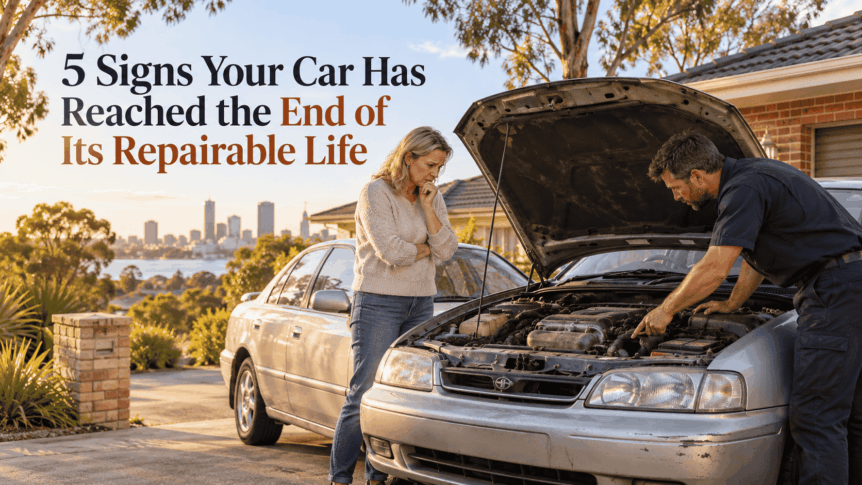
The clearest signs your car has reached the end of its repairable life are repair bills that keep overtaking its value, accumulating safety faults, structural rust, deterioration during storage and severe damage. None should be judged from appearances alone. The useful question is whether a proper assessment shows a realistic path back to safe, dependable use.
A mechanically broken car can still be worth repairing if the fault is isolated and the rest is sound. Several problems arriving together deserve a closer look. Work through these five signs before agreeing to another repair, and separate what can be fixed from what makes sense for your circumstances.
1. Repair Costs Keep Outpacing the Car’s Value
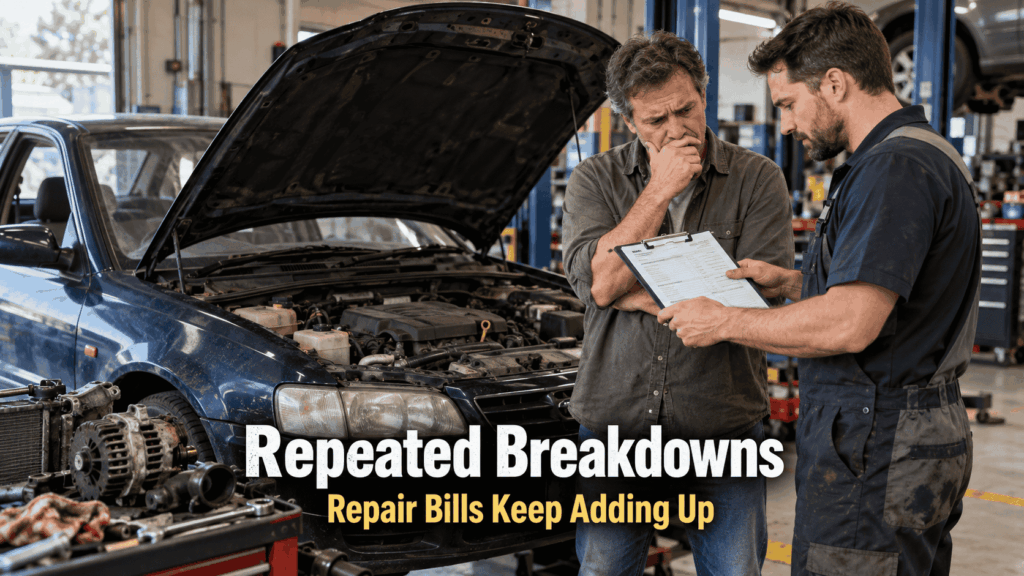
This is a common tipping point. If quotes for an engine, head gasket or transmission are climbing towards what the car would realistically sell for once repaired, ask your mechanic: “If I spend this money, what am I actually left with?” A repair that restores one component may leave several other expensive faults untouched.
Make and model matter, but the badge alone cannot settle it. An older Skoda hatchback with a documented service history and one diagnosed fault is a different prospect from the same model with recurring overheating and several overdue repairs. Ask about parts availability, the scope of the work and what the quote excludes.
A quick gut-check
- Get a written repair quote covering parts, labour and diagnostic work.
- Compare similar cars locally, remembering that asking prices are not confirmed sale prices.
- Factor in other work likely within the next six to twelve months and transport while the car is unavailable.
Money already spent cannot be recovered by spending more. Compare the next repair with the cost and condition of a realistic replacement, rather than assuming replacement means buying a new car.
2. Safety Problems Keep Accumulating
If each workshop visit uncovers another problem with brakes, steering, suspension or tyres, look at the whole repair list. One worn component is ordinary maintenance. Several unresolved faults, especially alongside a major mechanical problem, can change the decision.
Ask the workshop to distinguish urgent safety work from routine maintenance and cosmetic repairs. That gives you a clearer picture than a single total. If the car has a suspected safety fault, arrange an assessment and discuss suitable transport instead of driving it to test whether it feels all right.
3. Rust Has Reached the Chassis or Structural Panels
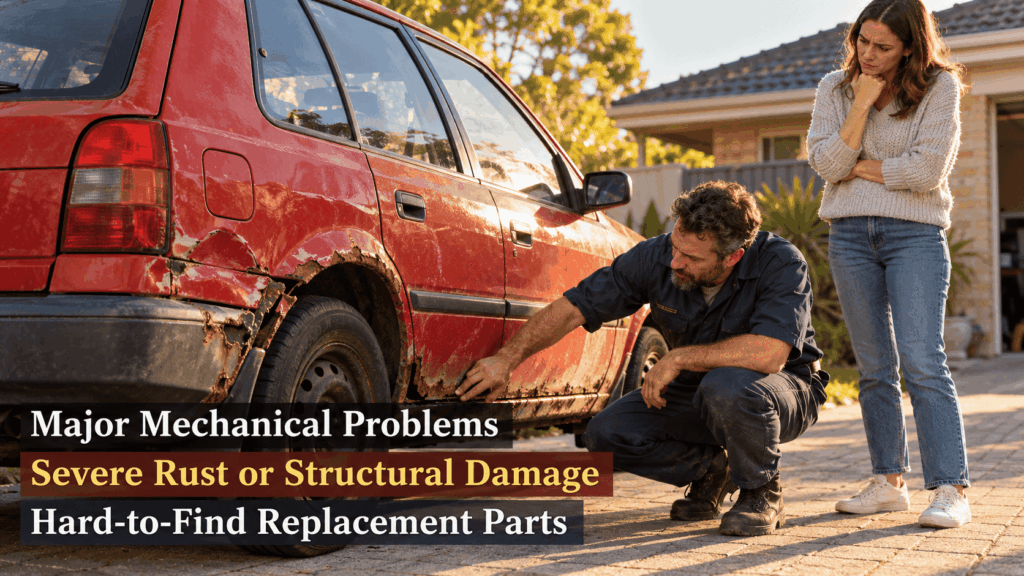
Surface rust on a panel and corrosion around a structural mounting point are different problems. Rust affecting chassis rails, floor sections or suspension mounting areas needs a qualified assessment; paint or a superficial patch does not establish that the underlying structure is sound.
Ask where the corrosion ends, what a proper repair involves and whether more damage is hidden nearby. When structural work sits on top of mechanical faults, deciding whether to sell or scrap becomes a question about the whole vehicle. Avoid authorising a small visible repair without understanding the likely scope.
4. The Car Has Been Sitting Unused for Months
A long spell off the road is a reason to reassess, rather than proof a car is finished. A flat battery might be straightforward; brake problems, deteriorated tyres, leaks or damaged wiring can make getting it dependable again a larger job. Storage conditions and the reason it was parked matter as much as the time elapsed.
For a car parked at a home in Anketell, access is part of that assessment too: tell the workshop or towing operator if it is behind another vehicle, on soft ground or unable to roll. Establishing how it can be moved avoids committing to repairs before you understand the practical effort involved.
Start with the original fault. If it was parked because the engine failed, fitting a battery does not resolve that failure. Ask for an assessment of both the known problem and anything that has developed while it sat, then weigh the combined work against how you intend to use the car.
5. It’s Been Written Off, or Damaged by Accident, Flood, or Fire
Serious damage can affect far more than the visible panels. A car that starts after a crash, flood or fire still needs an assessment of the affected structure, wiring and safety systems. Starting the engine does not demonstrate that the vehicle is safe or that a repair will be economical.
Do not treat every insurance write-off as the same thing. WA distinguishes repairable from statutory write-offs, and repairable write-offs have inspection and licensing requirements before returning to public roads. Establish the classification and repair scope before spending money. This post’s broader checklist helps with the decision; it cannot replace the damage assessment.
Deciding What to Do Next
One sign is a reason to investigate. Several together can make another repair difficult to justify, but there is no universal age, kilometre reading or repair-cost percentage that decides it for every owner. A well-maintained older car with one repairable fault may still serve a useful purpose.
Put the workshop’s findings beside your replacement options, likely downtime and how much reliability you need. If the car is no longer a sensible repair project, usable components and recyclable material may still have value. Get an individual assessment rather than assuming it is worthless or relying on an advertised maximum.
If you decide against further repairs, the scrap car removal service explains one option for moving it on; Cash For Cars Perth can help you assess that option on 0420 262 651.