


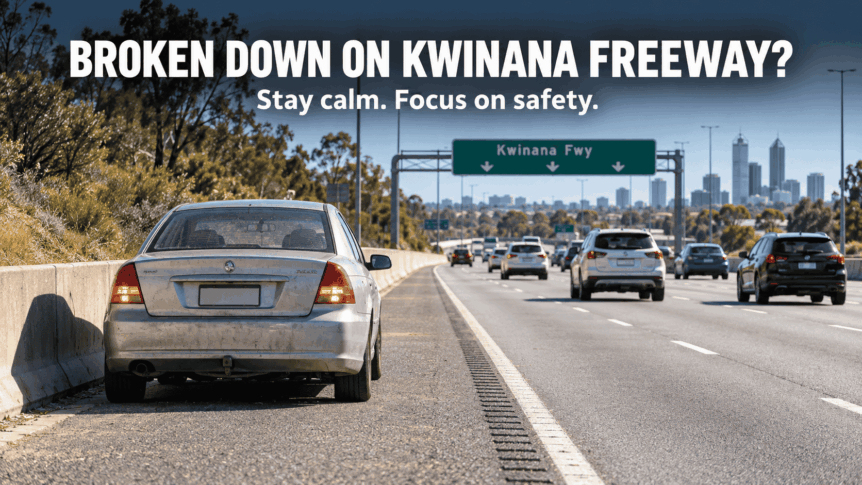
If your car has ever died on you mid-merge on the Kwinana Freeway, or stalled in the right lane of the Mitchell heading into the city, you know it’s not just inconvenient – it’s genuinely stressful. Traffic doesn’t slow down because you have. Here’s what to actually do in that moment, and what it might mean for the car afterwards.
Getting Safe Comes Before Anything Else
Both freeways move fast and have limited shoulder space in sections, particularly through the tunnels and elevated stretches near the city. If your car loses power or starts overheating:
- Indicate early and move left across the lanes as soon as it’s safe, aiming for the emergency breakdown bay or as far onto the verge as possible.
- Turn on your hazard lights the moment you sense trouble, not after you’ve stopped.
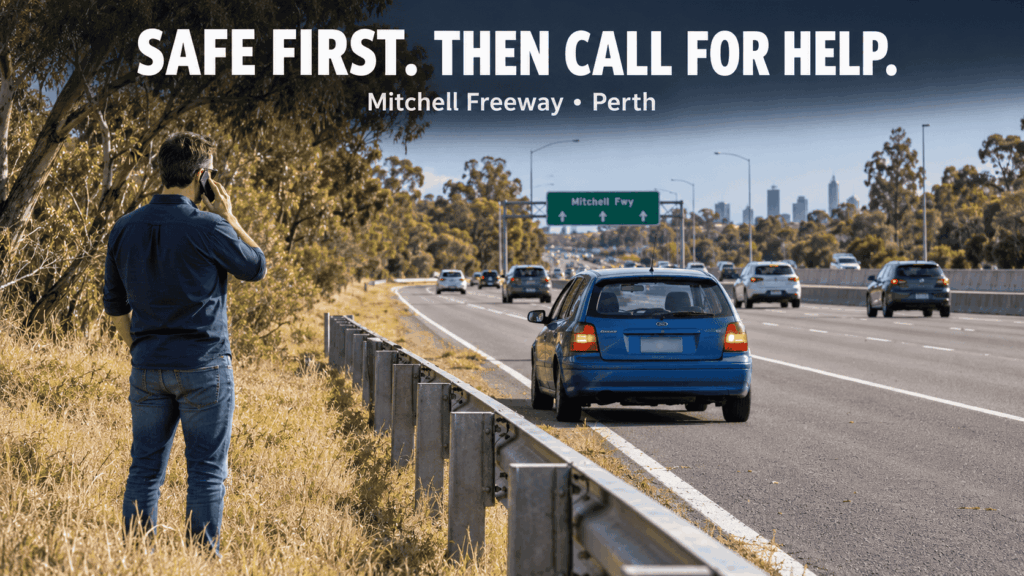
- If you can’t get off the road at all – for example, if you’ve stalled in a live lane – stay in the car with your seatbelt on and hazards flashing, and call 000 if traffic conditions make it dangerous. Don’t stand behind the vehicle.
- Once stopped safely, exit on the passenger side if you’re close to moving traffic, and get behind the barrier if there is one.
Main Roads WA monitors both freeways with cameras and can dispatch assistance for vehicles causing a hazard, so it’s worth calling 13 11 58 (the Main Roads WA traffic line) if you’re stuck in a spot that’s blocking traffic, even while you’re arranging your own tow.
Once You’re Safe: Working Out What Happened
Freeway breakdowns are usually one of a handful of things: overheating (common on hot Perth afternoons, especially on the Kwinana’s longer uphill stretches), a flat battery, a snapped belt, or a transmission or engine fault that’s been building for a while. If smoke or a strong burning smell is involved, don’t try to keep driving even a short distance to the next exit.
Is It Worth Fixing?
For a car that’s given you years of reliable use, a roadside failure is often a one-off and worth repairing. But if this breakdown is the latest in a run of expensive problems, or the car is old enough that a mechanic’s quote is edging toward what the car is actually worth, it’s a reasonable moment to ask whether repairing it still makes sense.
If the Car Isn’t Worth Fixing
A lot of Perth drivers end up here eventually – not because anything dramatic happened, but because an older car has quietly become more trouble than it’s worth. If that’s where you land, selling it for wrecking or parts is usually simpler and faster than trying to sell it privately, especially if it’s not currently driveable.
What Actually Affects the Value
A few genuine factors matter more than people expect:
- Whether it runs or can be started – a non-running car isn’t worthless, but it’s valued differently to one that can be driven onto a truck under its own power.
- Completeness – an engine, transmission, and major parts still in place matter more to value than cosmetic condition.
- Make and model – some vehicles have stronger demand for used parts than others, which affects what a wrecker can offer.
- Damage type – accident damage, flood or fire damage, and mechanical failure are all assessed differently, but none of them rule a car out from being bought.
Vehicles that are stolen, still under finance, or are just a body shell without a chassis generally can’t be purchased, so it’s worth checking your finance status before calling around.
The WA Paperwork Most People Forget
Selling a car in Western Australia comes with a couple of steps that are easy to overlook when you’re just trying to get a dead car off your hands:
- Number plates stay with you. In WA, plates belong to the registered owner, not the vehicle, so they should be removed before the car is picked up.
- Lodge a Notification of Disposal. Once the car has sold, you’re required to notify the WA Department of Transport that you’ve disposed of the vehicle. This protects you from future fines, tolls, or liability tied to a car that’s no longer yours.
- Bring valid photo ID when the car is collected. It doesn’t need to be the registered owner’s ID, but the seller does need to produce one.
What Same-Day Removal Actually Looks Like
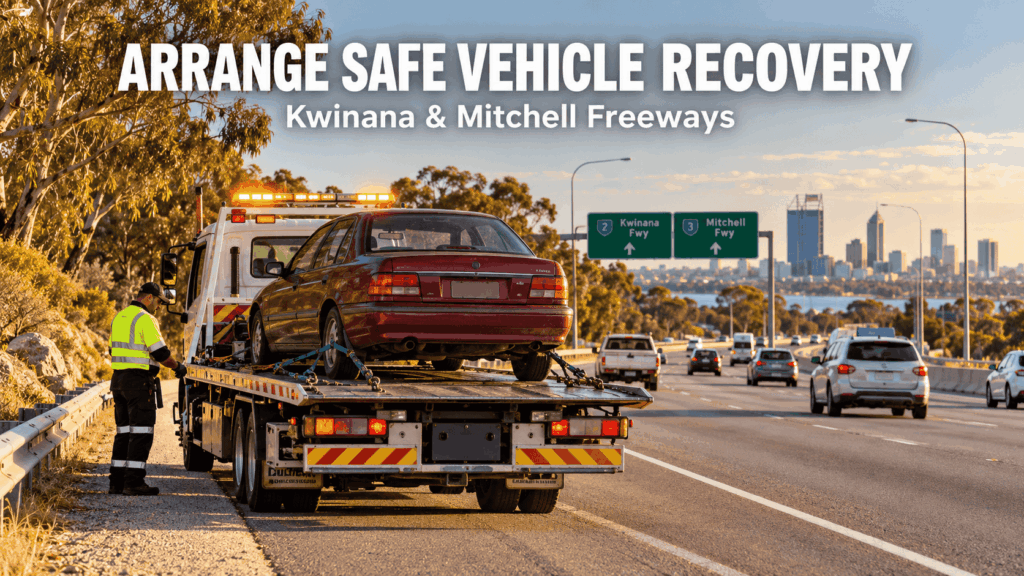
If the car is undriveable after a freeway breakdown, it still needs to get off the road or out of a tow yard, which can rack up daily fees quickly. Cash For Cars Perth covers the whole Perth metro area (not Bunbury or further south) and offers free same-day towing – often within two to three hours if you call before midday. The process is straightforward: you get a quote over the phone, a truck comes to wherever the car is, and payment is made in cash or instant OSKO transfer before it leaves the property, whether that’s your driveway, a mechanic’s, or a tow yard.
The yard is licensed for dismantling and recycling at 5 Hantke Place, Welshpool, and buys running and non-running vehicles, including those with accident, flood, or fire damage, deregistered cars, and write-offs – up to $9,999 depending on the vehicle.
Next Steps
A freeway breakdown has a way of forcing a decision you’d otherwise put off. If your car isn’t worth fixing again, getting it removed quickly is usually the least stressful option. Call 0420 262 651, Monday to Saturday, 7:30 AM to 6:00 PM, for a quote – there’s no obligation to sell, and if you go ahead, same-day pickup is often available.