



A car that will not start leaves you at a disadvantage if the buyer knows more about its likely value than you do. The best way to avoid scrap yard lowball quotes is to give each buyer the same clear description, compare what you will actually receive after collection costs, and get the conditions in writing before booking.
You do not need to diagnose every fault or pay for repairs just to request an offer. You do need to separate what you know from what you suspect. A flat battery, a seized engine and a car that has simply been parked for months are different starting points for a conversation.
Buyers assessing broken-down cars should explain which details their offer depends on. An unexplained discount for “not running” gives you little basis for deciding whether it is fair.
Why a Car That Won’t Start Gets Lowballed
When the cause is unknown, a buyer may allow for the risk of a major mechanical problem. That uncertainty can justify a cautious estimate, but it does not establish that the engine has failed. Describe the symptoms: does the starter turn, do the dashboard lights come on, and when did the car last run?
A warning sign is a confident phone offer followed by a large reduction on arrival without a specific new finding. Ask what changed between the description you supplied and the vehicle in front of the driver. A genuine discrepancy deserves an explanation; pressure to decide quickly does not answer the question.
What Actually Determines the Value of a Non-Running Car
A non-running vehicle may have value in reusable components as well as recoverable metal. Make, model, year, condition and completeness all matter. For example, when comparing offers for an older Land Rover, identify the exact model and engine rather than asking buyers to price an unspecified 4WD.
Tell each buyer whether the engine, transmission, wheels and other major components are present. Include known accident, fire or flood damage and provide clear photos. Do not describe a component as working if you have no way to check it.
- Parts demand: usable components only add value when there is a market for that model and their condition supports reuse.
- Completeness: missing parts can change both salvage value and the work needed to collect the vehicle.
- Damage: a starting fault is different from structural damage, and the quote should reflect the actual description.
- Metal recovery: weight and material content contribute, but a heavier vehicle does not automatically receive the better overall offer.
For a fuller explanation of these factors, the guide to valuing a broken-down car helps you understand what sits behind an estimate. Use that understanding to ask better questions, rather than treating another vehicle’s price as a guaranteed benchmark.
How to Avoid a Lowball Quote
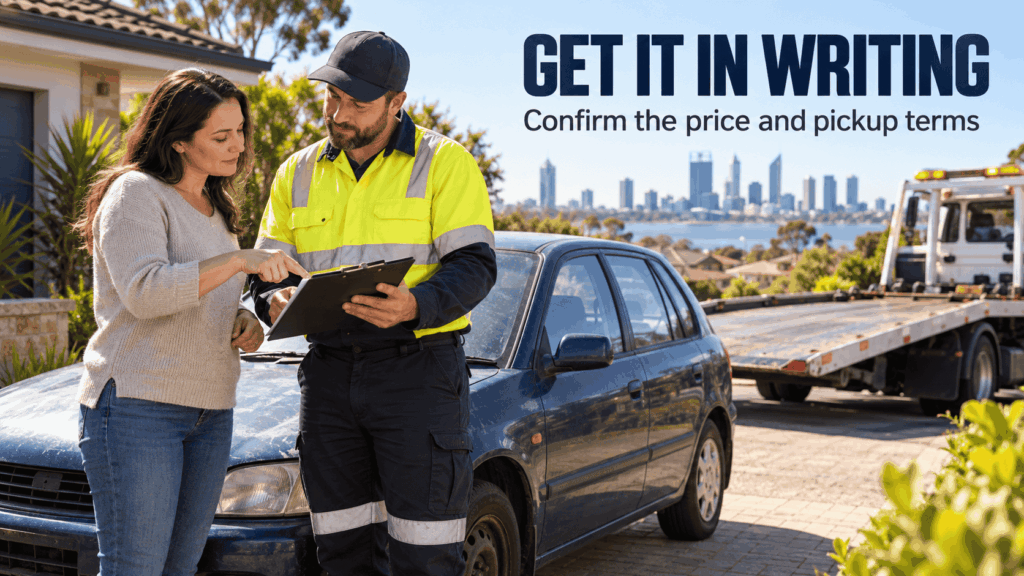
Get two or three quotes using the same information and photos. Record the buyer’s name, the amount offered, whether collection is included, and any conditions. Comparing a firm offer with an optimistic estimate is misleading unless you understand when either can change.
Collection access belongs in that description. For a car in a Booragoon driveway, explain whether it is behind a gate, under a low carport or blocked by another vehicle. Say whether it rolls and steers, whether the tyres are flat, and whether the keys are available. Photos of the approach can prevent an avoidable dispute about loading.
Before accepting, ask these questions and keep the answers by text or email:
- Is this a firm offer based on my description, or an estimate subject to inspection?
- What specific findings would change the amount?
- Does the amount include towing, loading and any other charges?
- How and when will payment be made?
- What happens if we cannot agree on the price at collection?
Compare the net amount you will receive. A higher headline offer can be worse if fees are deducted later. Free towing is a term to confirm with the particular buyer, rather than a reason to assume every paid collection service is illegitimate.
What to Expect on the Day
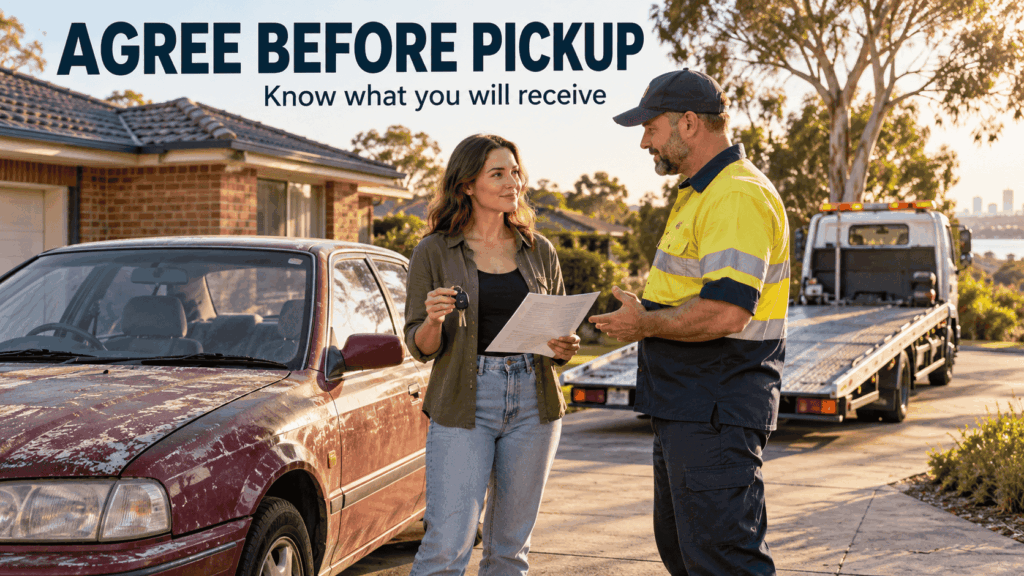
Have your written quote, photos and agreed collection details ready. Let the driver compare the car with the information supplied. If the amount changes, ask for the reason and the revised net payment before deciding whether to proceed.
Check any claimed difference against your messages. A missing gearbox that was never disclosed is different from a starting fault you described from the beginning. You can ask for time to consider a revised offer; the arrival of a truck is not a substitute for a clear explanation.
Agree the payment sequence before loading starts. If payment is by bank transfer, check your own account rather than relying on a screenshot or a promise that funds are on their way. Keep the agreed sale details and payment record so you have a clear account of what happened.
Get a Straight Answer on What Your Car Is Worth
A fair comparison starts with accurate information and ends with a clear net amount. You cannot remove every uncertainty from an untested vehicle, but you can ask buyers to explain their assumptions, disclose fees and identify the conditions that could change an offer.
If you would like help comparing an offer, the information on selling an undrivable car is a useful next step, or you can talk through your vehicle’s details with Cash For Cars Perth on 0420 262 651.