


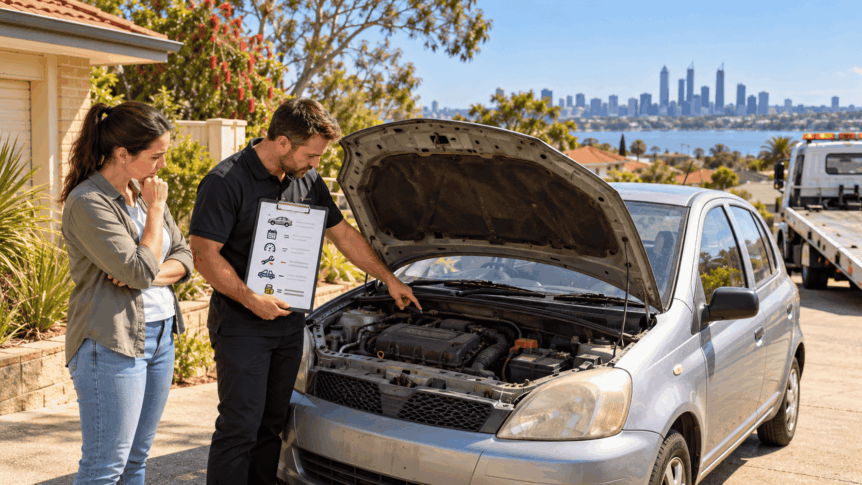
If you’ve got a car sitting in the driveway that won’t start, has a major mechanical fault or came out second-best in a prang, you’ve probably asked: “How much is my broken-down car worth?” In Perth, there is no reliable figure that applies to every non-runner. Its value depends on what can still be used, what can be recycled and the work needed to recover it.
A broken-down car is not automatically worth only its scrap metal. A failed engine may leave useful panels, a gearbox and interior parts intact. This guide explains how those details affect an assessment, with three examples to help you understand the differences.
What Actually Determines the Value of a Broken-Down Car
Weight and Scrap Metal Value
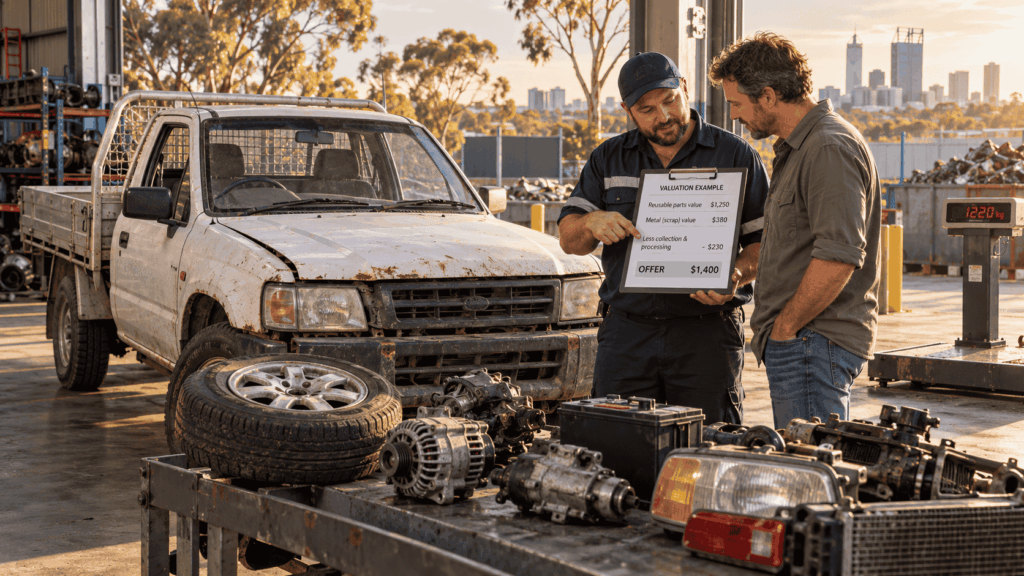
Every car contains recyclable metal. Heavier vehicles, including many utes, vans and 4WDs, may contain more recoverable material than small hatchbacks. However, weight alone does not establish the offer: a buyer also has to allow for collection, dismantling and processing.
Metal prices change, and an online price for a particular metal is not the price of a complete car. Vehicles contain mixed materials, fluids and components that need handling. Treat scrap value as one part of the assessment, rather than multiplying a metal price by the car’s total weight.
What’s Still Usable
A wrecking yard may recover engines, gearboxes, alternators, panels, wiring looms, seats and interior trim. A car with a dead engine but a straight body can still have useful parts. Conversely, a running car with extensive rust or missing components may offer fewer recovery options.
For a common model such as a Nissan hatchback or sedan, the specific model, year and parts compatibility matter more than the badge alone. A component has resale value only if someone needs it and its condition can be established; popularity does not guarantee a higher offer.
Make, Model and Demand
Two cars of similar size can receive different assessments because demand for their components differs. An engine variant, transmission type or model update can change which parts fit other vehicles. A rare component may be valuable, but a small buyer market can also make it harder to sell.
Completeness and Condition
Missing engines, transmissions, wheels or doors remove potential parts and recyclable material. A complete non-runner often gives a buyer more options than an otherwise similar stripped shell. Report what is missing, rather than assuming the assessor will spot everything in one photograph.
Time parked outside can change the picture too. Water entry, rust and deteriorating trim may reduce the usefulness of parts that were sound when the car first stopped. The explanation of why broken cars lose value covers that separate question; here, the assessment needs to reflect its condition today.
Why Location and Access Matter to the Offer
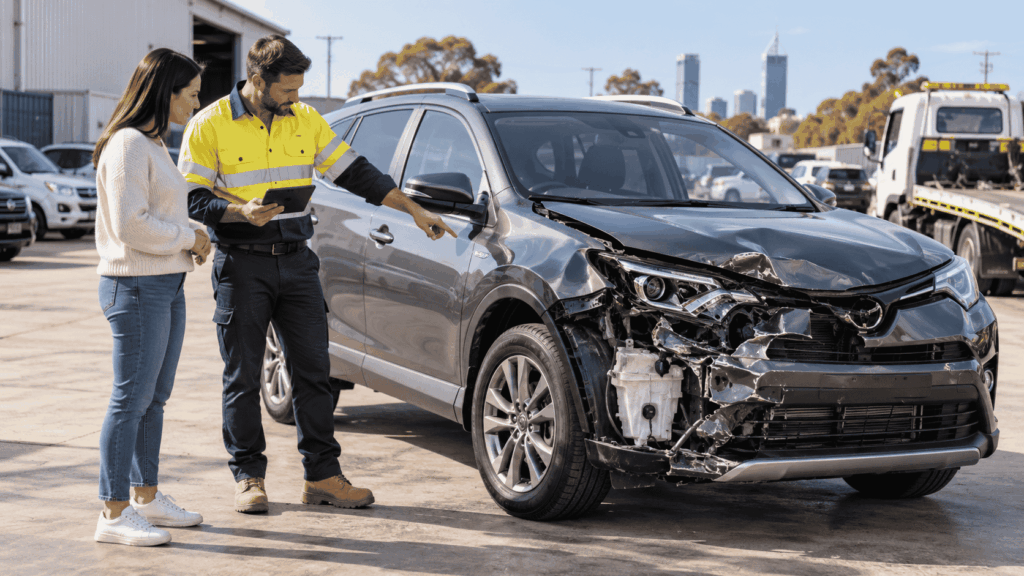
Recovery takes equipment and time, so the car’s position can affect the arrangements behind an offer. The suburb is only part of the story. A vehicle on a clear driveway is a different job from one behind a locked gate, inside a low garage or on soft ground.
For example, a car in an East Victoria Park driveway may be straightforward to reach, while a car in the same suburb with seized wheels and restricted access needs more planning. Describe whether it rolls, steers and can be reached by a recovery vehicle.
When comparing assessments, check whether collection is included and whether any access issue could change the amount paid. A larger headline offer is less useful if the collection terms are unclear. Confirm those details before treating two offers as directly comparable.
Three Worked Examples
Example 1: The stripped, rusted non-runner. Think of an old sedan that has been sitting under a tarp for years, with a seized engine, rusted panels and several parts already removed. Its assessment may depend mainly on recoverable metal and whatever usable components remain. Being a familiar model cannot replace missing parts.
Example 2: The accident-damaged car with usable mechanical parts. A car with front-end damage may still have an intact gearbox, usable interior and some undamaged panels. Those components can change its value compared with a stripped shell. However, collision damage can affect mechanical parts too, so a buyer needs details rather than an assumption that they still work.
Example 3: The old but still-running car. A vehicle that starts and drives may allow more components to be tested and may offer more options than an equivalent non-runner. That does not automatically make it the most valuable example: its age, mileage, condition and demand still matter.
These are comparisons, not price bands or guarantees. A complete car with a failed engine could be worth more to a particular buyer than a running car with little parts demand. The useful question is what remains recoverable in your vehicle, rather than which example sounds closest.
Getting an Accurate Number for Your Car
Start with the make, model, year, mileage and known fault. Say whether it starts, whether the engine or transmission has been tested, what is missing and where it is parked. Clear photographs of the exterior, interior and damage help distinguish a complete vehicle from one with fewer usable components.
If the cause of the breakdown is unknown, say so. “It won’t start” is different from a confirmed seized engine. Ask whether the initial assessment is provisional and what could change it after inspection. Keep collection terms consistent when comparing offers, and avoid spending on repairs solely because you expect a higher sale price.
If an individual assessment would help, Cash For Cars Perth can discuss your undrivable car on 0420 262 651; explain its condition and ask for the amount and collection terms to be confirmed before pickup.