


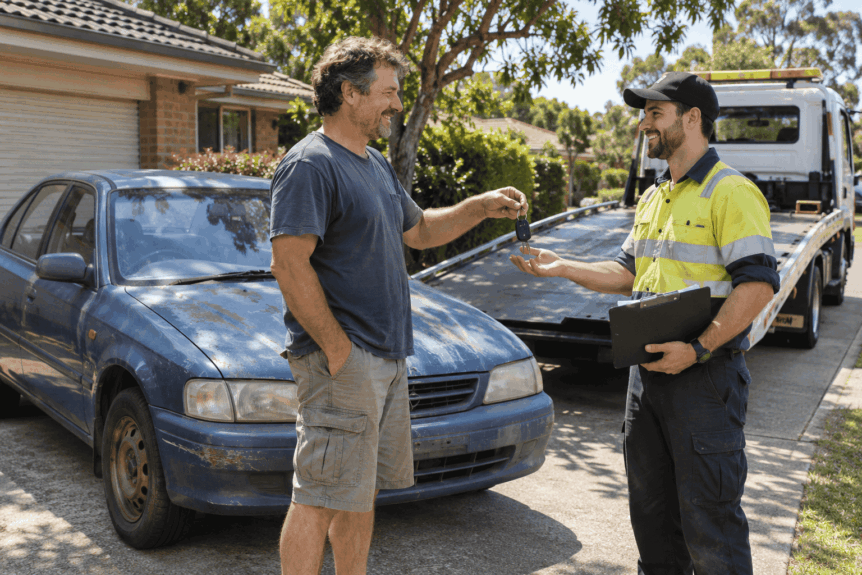
If you’ve got an old car sitting in the driveway that hasn’t moved in months, you’ve probably turned the question over a few times: strip it for parts and sell them off one by one, or just hand the whole thing over for a single payout? Both approaches can work. Which one actually makes sense depends on the car, your time, and how much hassle you’re willing to take on.
What Parting It Out Actually Involves
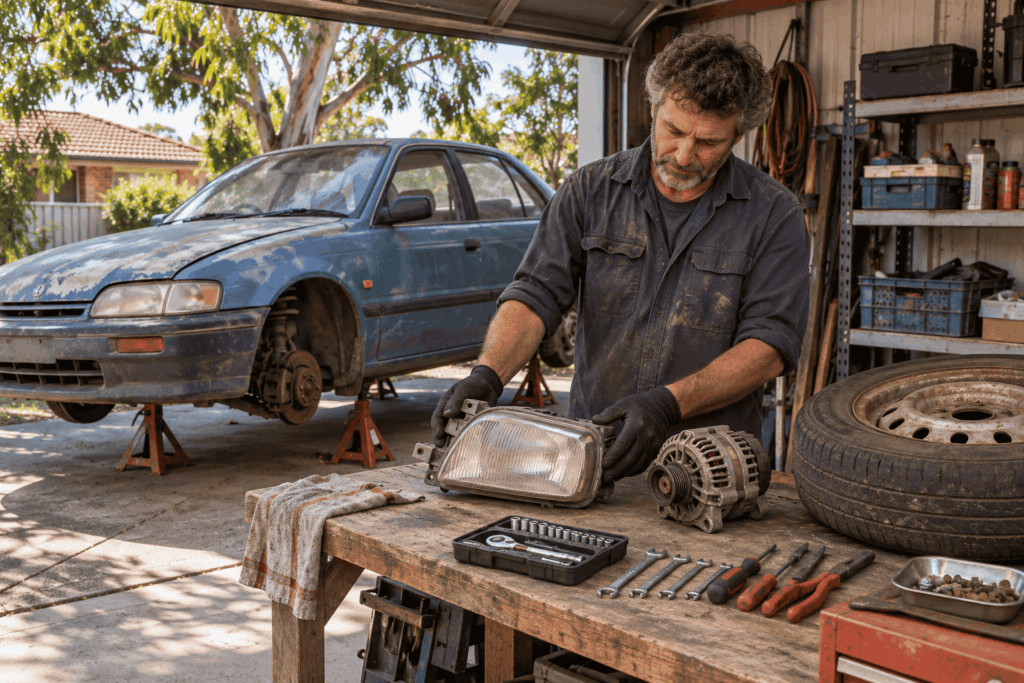
Parting out a car means removing individual components – the engine, gearbox, alternator, doors, seats, wheels, infotainment unit, whatever still has value – and selling each one separately, usually through online marketplaces, wrecking forums, or to individual buyers who need that specific part for their own car.
The Time and Effort Side
This is the part people tend to underestimate. Pulling parts out cleanly takes proper tools, a safe place to work, and a fair bit of mechanical know-how – especially for anything involving the engine, transmission, or fuel system. Then there’s photographing each part, writing listings, answering messages, negotiating, packaging, and arranging pickup or postage for buyers scattered across Perth or interstate. A car with forty saleable components can easily mean forty separate transactions.
The Money Side
In theory, parts sold individually can add up to more than a single lump-sum offer, particularly if the car has a few high-demand items like a low-kilometre engine or an intact set of alloy wheels. In practice, a lot of that theoretical value gets eaten up by time spent, buyers who never show up, parts that don’t sell and end up as dead stock, and the leftover shell you still have to get rid of once the good bits are gone – which usually means paying someone to tow it away anyway.
What Affects a Car’s Value When You Sell It Whole
Selling to a wrecker or car removal company as one transaction is simpler, but it helps to understand what actually moves the price:
- Make and model – some manufacturers have stronger demand for used parts than others
- Weight and metal content – heavier vehicles like utes, vans, and 4WDs generally carry more scrap value
- Condition of the driveline – a running engine and gearbox are worth more than seized ones
- Completeness – a car with the chassis and major panels intact is worth more than a stripped shell
- Damage type – accident, flood, or fire damage affects value differently depending on what still works
Current scrap metal prices also play into any offer, since they move with the broader metals market. A reputable buyer should be able to explain roughly how they’ve arrived at a figure rather than just naming a number.
The WA Paperwork You Can’t Skip
Whichever route you choose, a couple of things are specific to Western Australia and worth knowing before you start:
- Number plates stay with you, not the car. They don’t transfer with the sale, so remove them before the vehicle leaves your property.
- You need to lodge a Notification of Disposal with the WA Department of Transport once the sale is done. This officially records that you’re no longer the responsible party for the vehicle, which matters for registration, fines, and liability purposes.
Whoever you sell to should also expect to see valid photo ID at the time of sale – it doesn’t have to be the registered owner’s ID, but someone needs to be identifiable and accountable for the transaction.
When Parting Out Makes Sense – and When It Doesn’t
Parting out tends to suit people who already have mechanical skills, a secure place to store and work on the car, and genuinely enough spare time to see dozens of small sales through to completion. It can also make sense for rare or collectible models where individual parts are hard to find elsewhere.
For everyday cars – particularly ones that are old, damaged, written off, deregistered, or simply not running – selling the whole vehicle in one transaction is usually the more realistic option. There’s no ongoing admin, no half-sold car sitting around for weeks, and no leftover shell to deal with at the end.
Selling the Whole Car: What to Expect
Cash For Cars Perth buys cars, utes, trucks, vans, and 4WDs in any condition – running or not, accident-damaged, flood or fire-damaged, deregistered, or written off – for up to $9,999, across the entire Perth metro area (this doesn’t extend down to Bunbury or further south). The business operates from a licensed wrecking yard at 5 Hantke Place, Welshpool, where vehicles are properly dismantled and recycled rather than just left to sit.
Towing is free and often same-day – usually within two to three hours if you call before midday – and payment is made in cash or instant OSKO bank transfer before the car leaves your property. A few things they won’t take: stolen vehicles, cars still under finance, or bodies without a chassis.
Getting a Quote
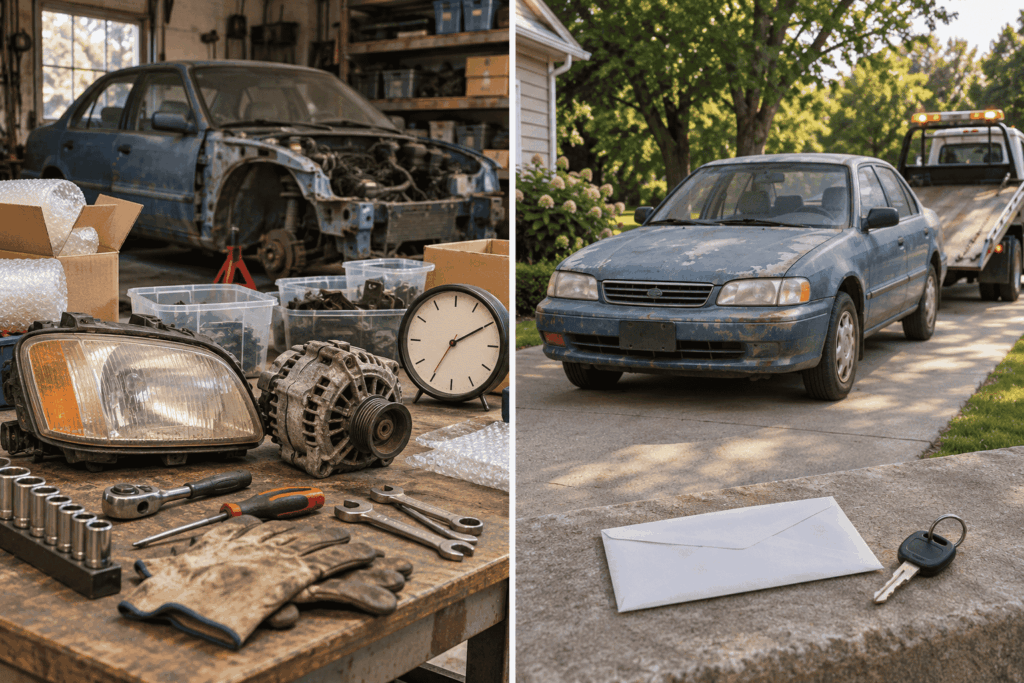
If parting a car out sounds like more admin than it’s worth, getting a straight quote for the whole vehicle is usually the quicker path. Cash For Cars Perth is open Monday to Saturday, 7:30 AM to 6:00 PM – call 0420 262 651 to describe your car and get an idea of what it’s worth before you decide which way to go.