


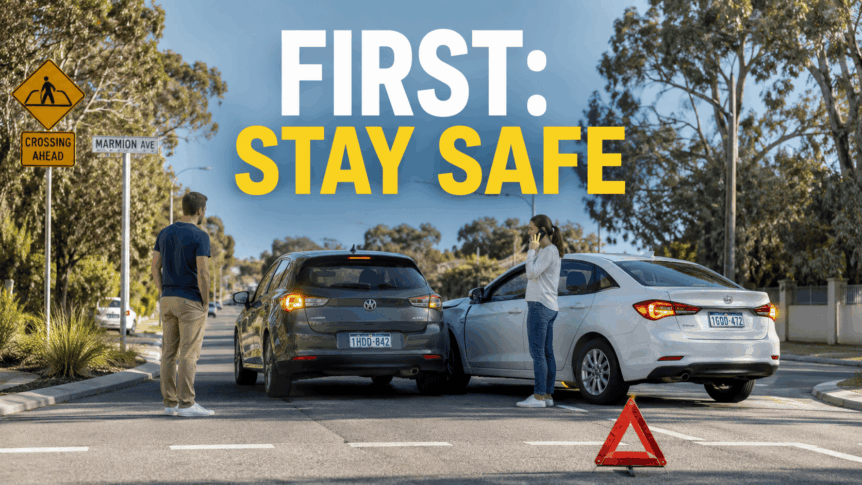
The hour or two after a car accident is when clear thinking is hardest and the decisions carry the most weight. What you photograph, who you call and where the car ends up all shape how the insurance claim and any later sale play out. Here’s a practical order of events for the first day, before you get anywhere near the “repair or sell” question.
Right After the Crash: Safety First
If it’s safe to do so, move the vehicles out of the traffic lane and switch on your hazard lights. Check yourself and everyone else involved for injuries before you give the car a second thought.
Call 000 straight away if:
- Anyone is hurt
- A vehicle is blocking traffic and can’t be moved
- There’s a fuel leak or any risk of fire
Even in a minor knock, stay calm and don’t argue about fault at the scene. Working out who was responsible is what insurers, and if it comes to it police reports, are for.
Exchanging Details and Documenting the Scene
Once everyone is safe, swap the following with the other driver:
- Full name and phone number
- Vehicle registration number
- Insurer, if they know it
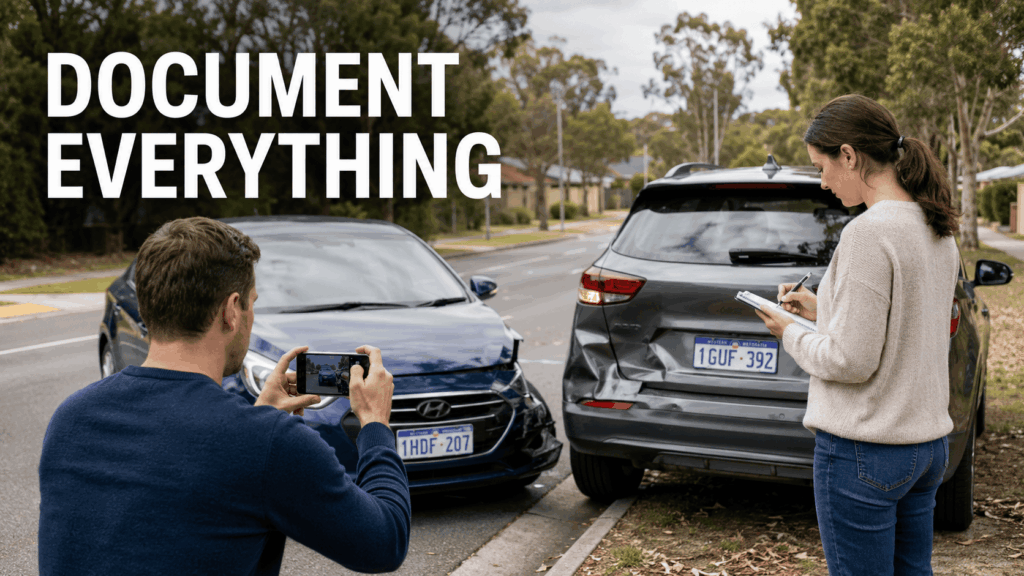
Then photograph everything while it’s in front of you: the damage to both cars, their position on the road, skid marks, and any signs or signals nearby. If anyone saw what happened, ask for their number too. Those photos do real work later, both for your claim and for getting an accurate read on the car’s value if you end up selling it as it stands.
When You Need to Report the Crash to Police
In Western Australia you must report a crash to police if someone is injured, if the total damage to all vehicles and property involved comes to more than $3,000, or if the other party or a damaged-property owner isn’t there to take your details. When you’re not sure, report it anyway. You can lodge it through the WA Police online crash reporting facility rather than waiting on the phone.
Contacting Your Insurer
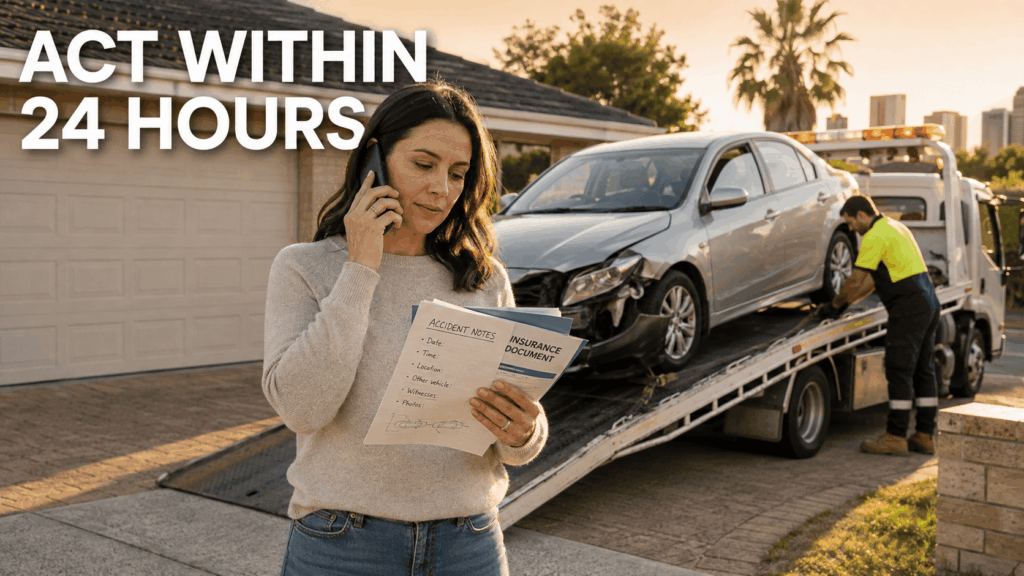
Tell your insurer as soon as you reasonably can, ideally the same day. They’ll want the details and photos you’ve already gathered, and they’ll tell you whether the car has to be seen by an assessor or an approved repairer before it’s moved. If the car isn’t drivable, don’t assume the towing is on you: check what your policy covers first, because some insurers arrange it directly.
What Happens to the Car Next
After it’s assessed, the repairer or insurer will class the car as either repairable or a write-off. Several things feed into that decision, and into what the car is worth if you’d rather sell it than fix it:
- Age and odometer reading
- How much of the damage is structural rather than cosmetic
- Cost and availability of parts for that make and model
- Whether the airbags went off
- The general condition of the car before the crash
Parts supply swings this more than people expect. For a discontinued make like Holden, a single hard-to-source panel or module can push a borderline repair over the line into write-off territory. Even so, a car doesn’t have to be a total write-off to be worth more sold than repaired, and what a damaged car is actually worth tends to come down to the same list above.
If You Sell Instead of Repairing: the WA Paperwork
Two things catch WA sellers out. First, standard WA number plates stay with the vehicle, not with you, so there’s nothing to unscrew before handover; only personalised or optional plates can be kept, and that has to be arranged by exchanging them at a Department of Transport centre before the sale. Second, once the car is sold you have seven days to tell the Department of Transport that you’ve ceased to be the owner and to give the buyer’s name and address. Leave that undone and any later fines or infringements can still find their way back to you.
Weighing Up Repair vs Sell
If the repair estimate is near or above what the car is worth, or you simply don’t want to be without a car for weeks, selling it in its current state is usually the practical call. Before deciding, it’s worth reading the repair quote closely to see how much of it is genuine structural work and how much is replaceable panels and trim.
Access matters as well. A damaged car that can’t be driven needs a tow, and most car removal buyers build that into their offer and collect from wherever the car is sitting. A local operator working from a Welshpool base, for instance, can usually reach a car anywhere in the Perth metro area the same day.
If selling turns out to make more sense, we buy cars, utes, vans, 4WDs and trucks across Perth in any condition, accident-damaged or already written off, and cover the towing. Call 0420 262 651 and we’ll talk you through what happens next. Our phones are open Monday to Friday 7:30 am to 5 pm and Saturday 7:30 am to 2 pm.
Common Questions
Do I have to call the police after a minor crash in Perth?
Only when someone is injured, when the total damage across everyone involved is more than $3,000, or when the other driver or a property owner isn’t there to take your details. Below that, reporting is optional, though it’s still worth doing through the WA Police online crash reporting facility if fault is likely to be disputed.
Can I sell my car before the insurer has assessed it?
If you’re making a claim, let the insurer finish its assessment first; the policy usually requires it and the car may need to stay where it is. If you’re not claiming, you can sell whenever you like.
Who pays for towing an accident-damaged car?
Check your insurance first, since many policies cover towing after a crash. If you’re selling to a car removal buyer instead, the tow is normally included in the offer at no extra cost.
What’s the one piece of paperwork I can’t skip?
Telling the Department of Transport within seven days of the sale that you’ve ceased to be the owner, along with the buyer’s name and address. That’s what formally ends your responsibility for the car.