


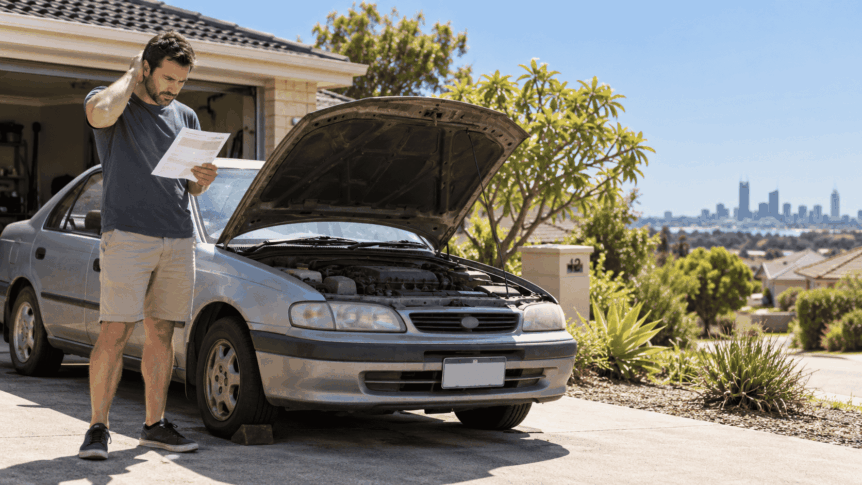
If your car has stopped running and you’ve parked it in the driveway “until you get around to it,” there’s a good chance the vehicle licence renewal has landed anyway. It’s a common question for Perth car owners: the car isn’t going anywhere, so surely the registration doesn’t matter either — right? Not quite. Here’s how it actually works in WA.
Short answer: yes, rego keeps running whether the car does or not
In WA, your vehicle licence (what most people call rego) isn’t linked to whether the car is drivable. It’s linked to the licence period you paid for — up to twelve months at a time — and it stays active, and payable, until that period ends or you formally deal with it. The Department of Transport has no way of knowing your car has a blown engine sitting in the shed. As far as their records are concerned, it’s still a licensed vehicle, and the renewal notice will keep arriving on schedule.
There’s no built-in “pause” option
Some states let you suspend registration for a vehicle that’s off the road. WA doesn’t have an equivalent hold-and-resume system for private vehicle licences. If you want to stop paying, the practical options are to let the licence lapse at expiry, or to cancel it early by returning your number plates to the Department of Transport. Either way, something has to happen — the cost doesn’t stop on its own just because the car does.
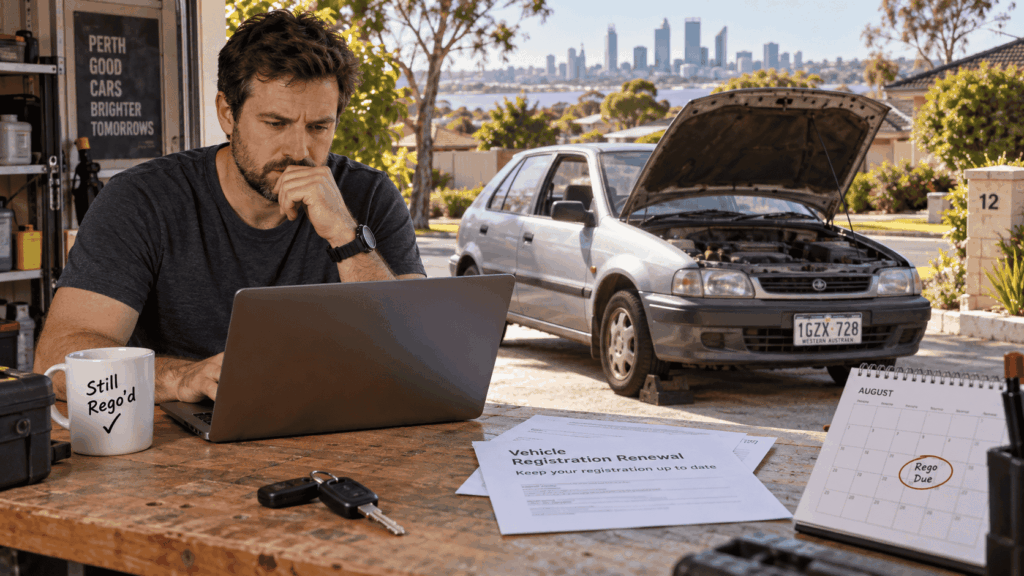
Can you get a refund for the time you don’t use?
Yes, and this is where it pays to act rather than let a dead car sit registered for months. If you return your plates to the Department of Transport before your licence expires, you can apply for a refund of the unused portion of your vehicle licence fee, calculated from the date the plates are handed back. There’s also a pro-rata refund on the Motor Injury Insurance (MII) component — the compulsory third-party cover bundled into your rego — if the vehicle is de-licensed partway through the period.
A car that doesn’t run but is still fully licensed is quietly costing you money for cover you’re not using. Sorting out the plates as soon as you decide the car isn’t being fixed is usually the difference between claiming some of that fee back and letting it lapse unclaimed.
What if you’re not planning to fix it?
For a lot of non-running cars, repairs simply cost more than the vehicle is worth once it’s back on the road. If that’s where you’ve landed, selling it as-is is usually simpler than keeping it registered, insured, and taking up space while you weigh up options.
A few things worth knowing:
- Number plates stay with you, not the car. They don’t transfer to a wrecker or new owner — you keep them or return them to the Department of Transport yourself.
- You’re required to lodge a Notification of Disposal with the Department of Transport within seven days of selling, gifting, or otherwise disposing of the vehicle, so you’re not on the hook for anything that happens to it afterwards.
- Still-registered cars are fine to sell — just handle the plates and disposal notice once the sale is done.
What actually affects what a non-running car is worth
Buyers and wreckers generally weigh up a few things when quoting on a car that doesn’t drive:
- Make, model and age — some vehicles hold parts and scrap value better than others.
- What’s wrong with it — a seized engine, write-off, or flood or fire damage all affect what can be salvaged.
- Completeness — a car missing major components is worth less than one that’s intact but simply not running.
- Weight and metal content — utes, vans, and 4WDs typically carry more scrap value than small hatchbacks.
- Market conditions — like most commodities, scrap and parts prices shift over time.
None of this means a non-running car is worthless. Wrecking yards buy these vehicles for parts and recycling — a different proposition to selling a broken car to a private buyer who wants to drive it away.
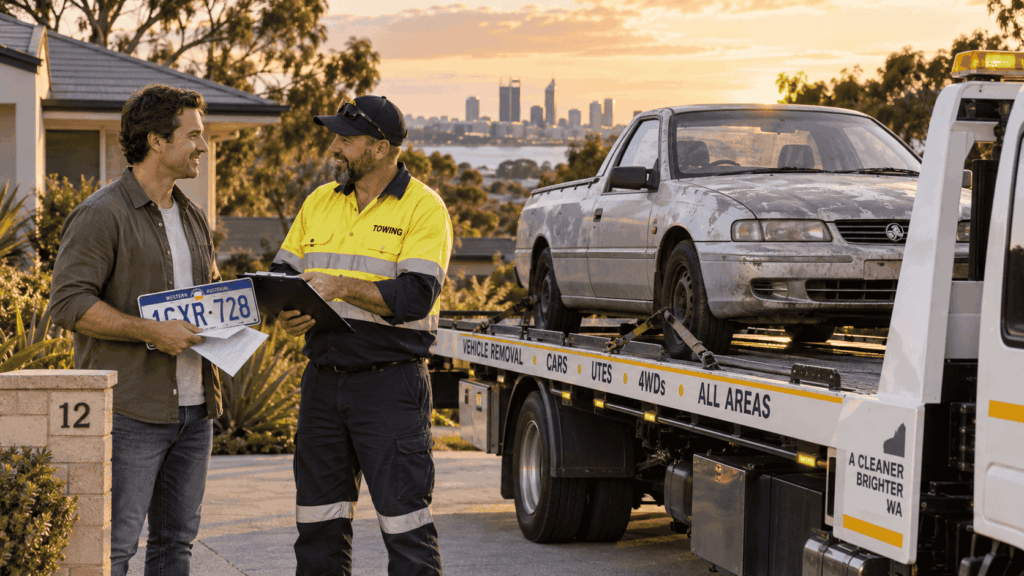
Selling a non-running or still-registered car in Perth
This is the situation Cash For Cars Perth deals with every day. We pay up to $9,999 cash for cars, utes, trucks, vans, and 4WDs in any condition — running, non-running, accident-damaged, flood or fire-damaged, deregistered, or written off — and it doesn’t matter whether the rego is current, lapsed, or somewhere in between. We won’t take stolen vehicles, cars under finance, or bodies without a chassis.
The process is simple: get a quote, we arrange free same-day towing (often within two to three hours if you call before midday), and payment is made in cash or instant OSKO transfer before the car leaves your property. You’ll need valid photo ID — not necessarily the registered owner’s, but whoever hands over the car needs one. We’re a licensed wrecking yard based at 5 Hantke Place, Welshpool, covering the Perth metro area, though not Bunbury or areas further south.
If a non-running car is quietly renewing itself every year, it’s worth weighing the cost of keeping it licensed against what it’s worth to you sold. Call 0420 262 651 for a free quote, Monday to Saturday, 7:30 AM–6:00 PM — no obligation, and most cars are gone the same day.