


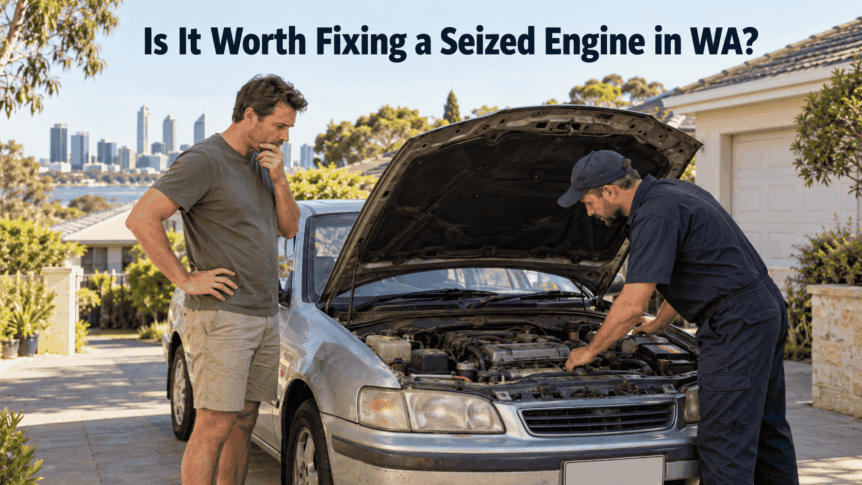
A seized engine is one of the more expensive mechanical failures a car can have, and it’s a common reason Perth owners end up asking whether their car is worth fixing at all. The answer depends heavily on the make and model — not just parts costs, but how those parts are sourced, how complex the labour is, and what the car is actually worth once it’s running again. Here’s how the economics play out across different vehicle types on WA roads.
What a Seized Engine Actually Means
An engine seizes when moving internal components — pistons, bearings, the crankshaft — stop being able to move freely. Common causes include oil starvation, severe overheating, a snapped timing belt letting valves and pistons collide, or water ingress from driving through flooding. It’s rarely a simple repair; most cases need a full rebuild or replacement, which is why mechanics quote it very differently from routine mechanical faults.
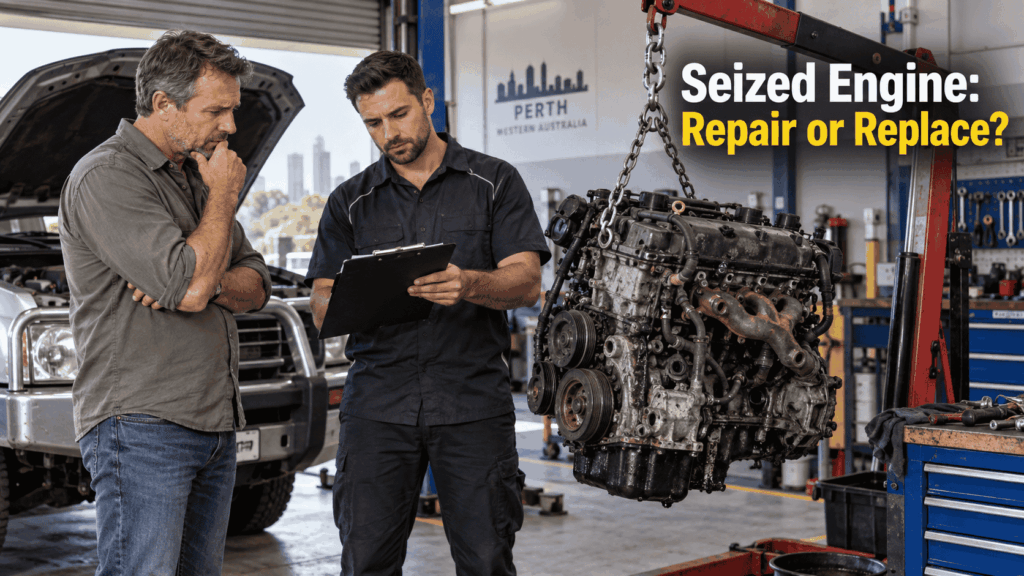
Why the Repair Cost Depends So Heavily on the Make
Three things drive the price up or down: how easy parts are to source, how many hours of labour the job takes, and whether a second-hand engine is available as an alternative to a new or reconditioned one. This is where the make of the car starts to matter.
Mass-Market Japanese and Korean Models
Toyota, Mazda, Hyundai and Kia have been sold in huge numbers across WA for decades, and their engines are shared across many models. Wrecking yards — including our own yard in Welshpool — regularly hold used engines and components from these brands, which keeps sourcing more straightforward than for less common vehicles. Labour and reconditioning costs still add up though, so is worth confirming with a mechanic before committing to a repair.
Popular Utes and 4WDs
Vehicles like the Hilux, Ranger, D-Max, Navara and Prado see heavy work and off-road use across WA, and seized engines aren’t rare on these models, particularly from overheating or running low on oil during long trips. Being so widely owned, parts are usually easier to find, but diesel engines are heavier and more complex, with turbos, injectors and emissions componentry adding to labour time and cost.
European Models
BMW, Mercedes-Benz, Audi and Volkswagen present a different picture. Parts are often imported, diagnostic work typically needs specialist equipment, and used engines are less plentiful in local wrecking yards than Japanese equivalents. Combined with lower resale value on older, high-kilometre European vehicles, a seized engine on one of these cars tends to tip the decision towards selling rather than repairing.
Older Australian-Built Models
Holden Commodores and Ford Falcons are still common around Perth, but since local manufacturing ended in 2017, new parts supply has been shrinking. Used engines remain available through wreckers, but the market value of these cars is often modest enough that a full engine rebuild rarely stacks up financially.
The Break-Even Question
Regardless of make, the same basic maths applies: get a firm repair quote (parts, labour and diagnostics included), then compare it with what the car is realistically worth running again. If the quote comes close to or exceeds that figure, it’s generally not worth proceeding. What the car is actually worth depends on:
- Age and odometer reading
- Service history and general body condition
- Whether the vehicle is currently registered
- How in-demand the make and model is on the second-hand market
- Any other existing mechanical or panel damage
A high-kilometre car with expired rego and other issues on top of the seized engine is a very different proposition to a low-kilometre, well-maintained one that’s otherwise in good shape.
If You Decide Not to Repair: WA Rules to Know
If you land on selling rather than repairing, a couple of WA-specific steps are worth knowing. Number plates stay with the seller, not the vehicle — they don’t transfer with the sale. Afterwards, you’re required to lodge a Notification of Disposal with the WA Department of Transport, which formally removes the car from your name and protects you from future liability. You’ll also need valid photo ID to complete the sale — it doesn’t have to be the registered owner’s.
Selling a Car with a Seized Engine in Perth
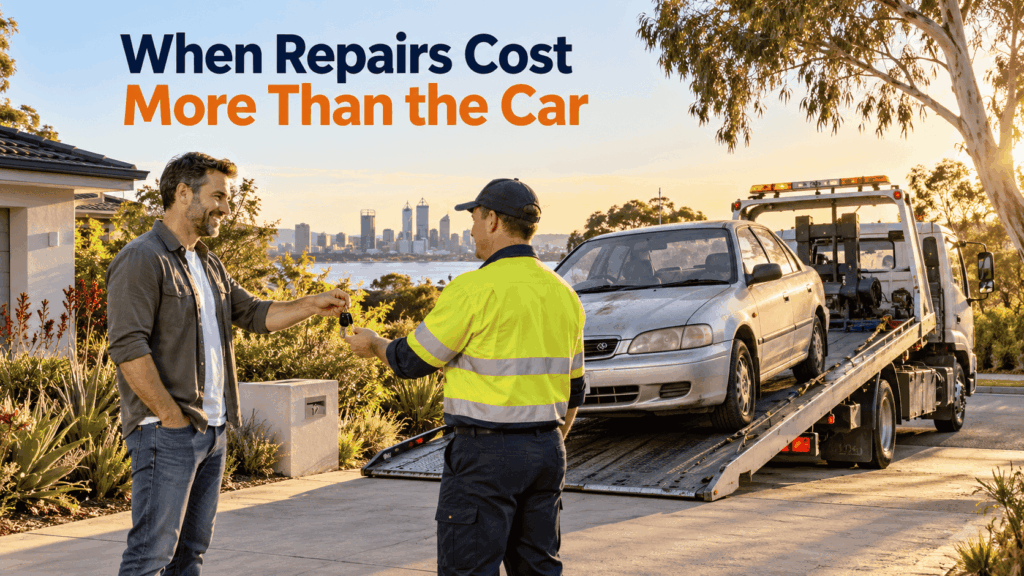
A seized engine doesn’t need to be fixed before you sell. Cash For Cars Perth buys vehicles with seized or blown engines along with other non-running, accident-damaged, flood or fire-damaged, deregistered and written-off cars, utes, trucks, vans and 4WDs of any make. We pay up to $9,999 depending on make, model and condition, and cover the entire Perth metro area (we don’t currently service Bunbury or areas further south).
Once a price is agreed, we arrange free same-day towing — often within two to three hours if you call before midday — and pay in cash or instant OSKO transfer before the car leaves your property. We’re a licensed wrecking yard based at 5 Hantke Place, Welshpool, where vehicles are dismantled and recycled properly. What we can’t buy: stolen vehicles, cars still under finance, and bodies without a chassis.
Get a Quote
If your engine has seized and the repair quote isn’t adding up, it’s worth finding out what the car is worth as is before spending more chasing a fix. Call Cash For Cars Perth on 0420 262 651 for a free, no-obligation quote — open Monday to Saturday, 7:30 AM to 6:00 PM.