


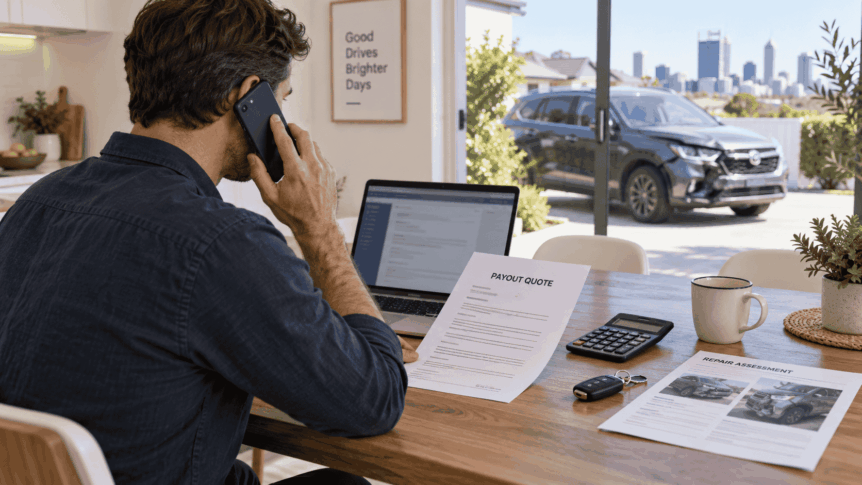
An accident is stressful enough without wondering what happens to the car loan on a vehicle that might now be worth a lot less than what you owe. It’s a common situation for Perth drivers, and the good news is that you almost always have options — you just need to sort out the finance before the vehicle can change hands.
The Short Answer: Yes, But the Finance Comes First
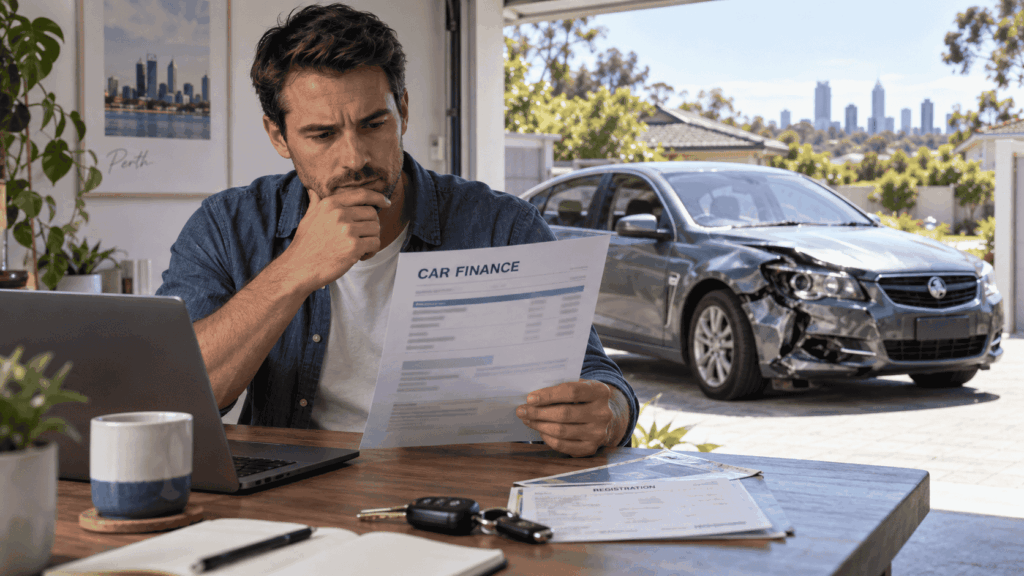
You can sell a car after an accident even if it’s still under finance, but you can’t legally transfer ownership until the loan is settled. While you’re making repayments, the finance company holds a legal interest in the vehicle — it’s the security for the loan, similar to how a bank holds an interest over a house under a mortgage. Selling the car without clearing that interest first would mean selling something you don’t fully own.
Why You Can’t Just Sell a Financed Car
What “Under Finance” Actually Means
When you take out a car loan, the lender registers an encumbrance against the vehicle through the Personal Property Securities Register (PPSR). That encumbrance stays attached to the car, not to you, until the loan is paid out in full. Buyers — including car removal and wrecking businesses — will check the PPSR before purchasing, and a car with an outstanding finance encumbrance generally can’t be bought or sold cleanly. This is also why Cash For Cars Perth, like most reputable buyers, doesn’t purchase vehicles that are still under finance.
If Your Insurer Has Written the Car Off
If the damage is severe enough that your insurer declares the car a total loss, the process looks a little different. Your insurer will pay out based on the vehicle’s assessed market value immediately before the accident. If there’s finance owing, the insurer typically pays the finance company directly first, and any remaining balance comes to you.
When the Payout Doesn’t Cover What You Owe
This is where things get tricky for a lot of owners. If the car had already depreciated below the loan balance — common with newer vehicles in the first couple of years, or after a low-deposit loan — the insurance payout might not fully cover what you owe. This is sometimes called negative equity or a shortfall, and you’d be responsible for paying the difference to the lender. It’s worth checking whether you have gap insurance, or asking your lender directly for your current payout figure, rather than assuming the insurance settlement will close the loan out completely.
Selling a Damaged Car Outside of an Insurance Claim
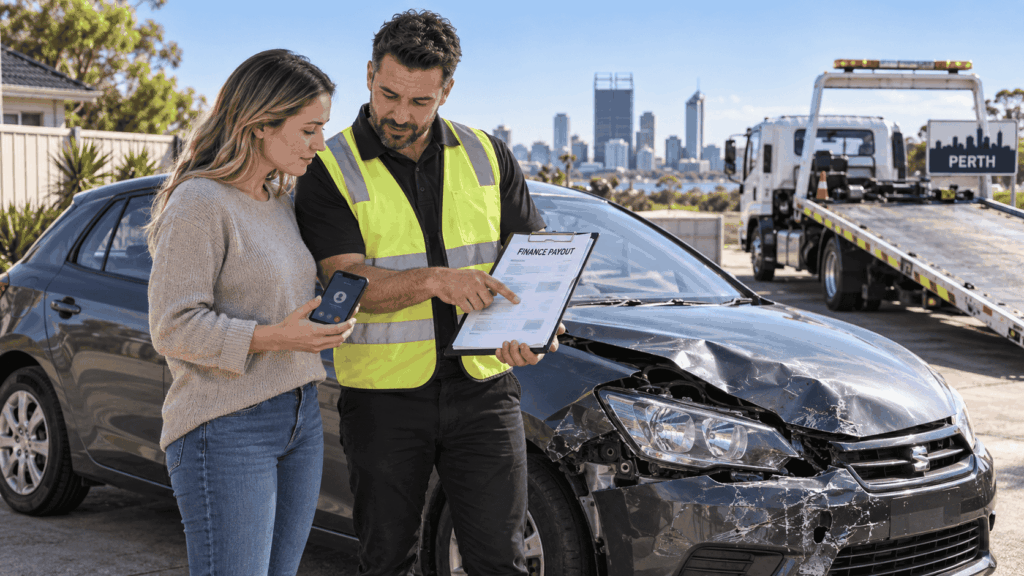
Not every accident goes through insurance. If the damage is manageable, or you’d simply rather sell the car in its current condition than deal with a claim, you can still do this — you’ll just need to clear the finance yourself first.
Steps to Take Before Calling a Wrecker
- Contact your finance company and request a current payout figure (the exact amount owing today, not your regular repayment balance).
- Ask whether there are any early payout or discharge fees attached to the loan.
- Arrange to settle the loan in full — some owners do this from savings first, then sell once the encumbrance is cleared from the PPSR.
- Get written confirmation (a discharge or clearance letter) once the finance is settled.
- Get a quote for the car itself once you’re clear to sell.
What Affects the Value of an Accident-Damaged Vehicle
Once the finance question is sorted, the next thing owners usually want to know is what their damaged car is actually worth. A few genuine factors come into it:
- Extent of the damage — whether it’s cosmetic, structural, or has affected the engine, transmission, or airbags.
- Whether the chassis is intact — a car with a badly damaged or separated chassis is treated very differently to one with panel damage.
- Make and model — parts demand and resale value vary a lot between common and less common vehicles.
- Weight and metal content — heavier vehicles like utes, vans, and 4WDs generally yield more usable steel and parts.
- Current scrap metal prices — these move with the market, so quotes can vary from week to week.
- Registration status — a deregistered or written-off car can still be sold, but it affects how it’s assessed and processed.
Worth noting: vehicles without a chassis, and any vehicle reported stolen, can’t be purchased by Cash For Cars Perth. Running, non-running, accident-damaged, flood or fire-damaged, deregistered, and written-off vehicles are all fine, once they’re free of finance.
What WA Law Requires When You Sell
Two Western Australian rules catch a lot of sellers out. First, number plates stay with you, not the car — remove them before the vehicle is collected. Second, once the sale is complete, you’re required to lodge a Notification of Disposal with the WA Department of Transport. This officially removes the vehicle from your name and protects you from any future liability connected to it, such as fines or infringements incurred after the sale.
Ready to Sell Once the Finance Is Cleared?
If you’ve settled the loan, or your insurer has finished processing a write-off and you just need the wreck removed, Cash For Cars Perth covers the whole Perth metro area (not Bunbury or further south) and can usually organise free same-day towing, often within two to three hours if you call before midday. Payment is by cash or instant OSKO bank transfer, made before the car leaves your property, and all you need on the day is valid photo ID — it doesn’t have to be in the registered owner’s name.
Call 0420 262 651 for a quote, or get in touch with your vehicle’s details and we’ll let you know where you stand.