


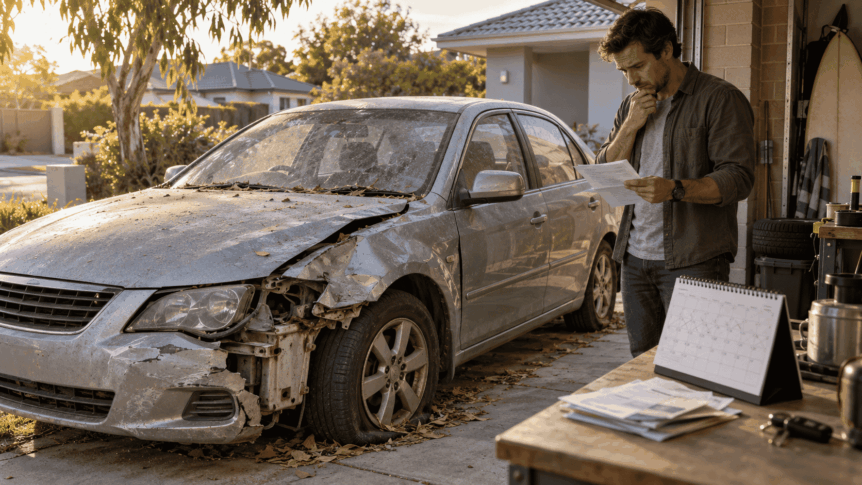
An accident-damaged car parked in the driveway isn’t neutral. Every week it sits there, it’s quietly costing you something — money, space, and in some cases, environmental damage you might not have thought about. If you’ve been putting off dealing with a written-off, non-running, or crashed vehicle, it’s worth understanding what that delay actually costs.
The Financial Cost of Doing Nothing
A damaged car that isn’t going anywhere still has bills attached to it. If it’s still registered, you may be paying compulsory third party cover on a vehicle you can’t legally drive. If it’s still comprehensively insured, that’s another ongoing cost for a car worth a fraction of its insured value after an accident.
There’s also the space itself — a driveway or carport taken up by a wreck is space you can’t use for a car you actually drive. If the vehicle ends up parked on the verge for an extended period, some local councils in WA will take an interest in unregistered vehicles left on public land.
The Environmental Cost You Don’t See
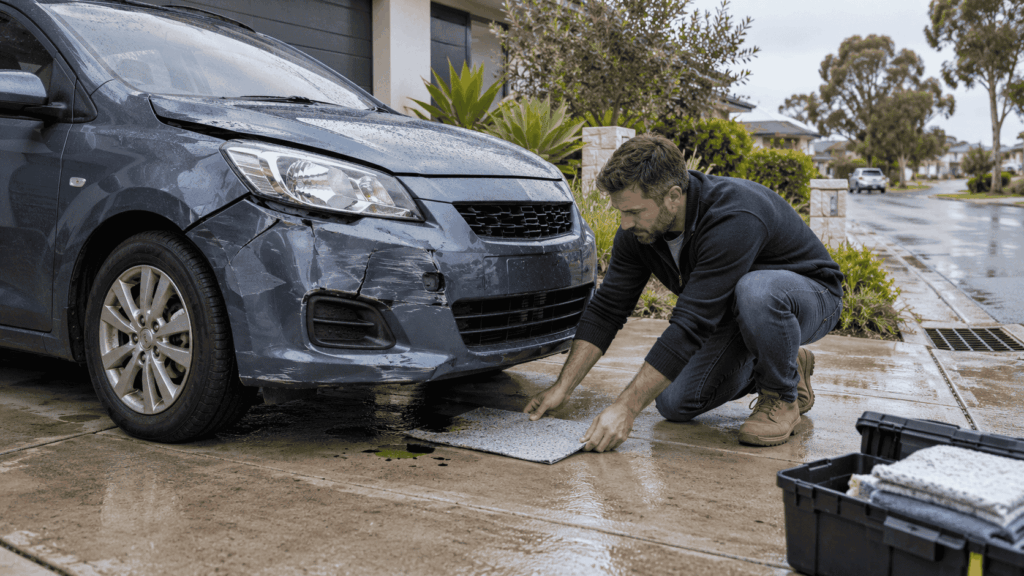
This is the part most people don’t think about until it’s pointed out. A car involved in an accident often has compromised seals, cracked lines, or a damaged sump, which means oil, coolant, brake fluid, and fuel can slowly leak out over weeks and months. On a concrete driveway that might mean a stain. On soil, gravel, or near a stormwater drain, it means those fluids have somewhere to go.
Rubber hoses and seals also degrade with age and sun exposure, so the longer a damaged car sits stationary, the more likely it is to leak. None of this happens overnight, but it adds up.
A licensed wrecking yard is set up to handle it properly — draining and disposing of fluids correctly, removing the battery and airbags safely, and recovering steel, aluminium, and other materials for recycling rather than letting them break down where they sit.
Why the Value Keeps Dropping the Longer You Wait
Cars don’t hold their value while they sit. A few things affect what a wrecker or car removal service can offer you:
- Completeness: A car with its engine, transmission, catalytic converter, and other parts intact is worth more than one that’s already been picked over for spares.
- Extent of damage: Whether the damage is cosmetic, structural, or has affected the chassis makes a real difference to what can be salvaged or resold as parts.
- Weight and materials: Scrap value is partly tied to the metal content of the vehicle, which moves with the broader scrap metal market.
- Time exposed to the weather: Rust spreads, wiring corrodes, and interiors deteriorate the longer a car sits outside.
- Whether it still has a chassis: A body without a chassis generally can’t be bought, since there’s no structural base left to work with.
In short, a car sold soon after an accident is usually worth more than the same car sold six months later.
WA Rules Worth Knowing Before You Sell
Selling a car in Western Australia comes with a couple of specific requirements that catch people out.
Number plates stay with you
Unlike some other states, number plates in WA belong to the registered owner, not the vehicle. When you sell or scrap a car, the plates come off and stay with you — they don’t travel with the vehicle to the wrecking yard.
Lodge a Notification of Disposal
Once you’ve sold the vehicle, you need to lodge a Notification of Disposal with the WA Department of Transport. This formally removes your name from the vehicle’s record, so you’re not left responsible for fines, tolls, or other issues tied to a car you no longer own.
ID and ownership
You’ll need valid photo ID to sell a vehicle, though it doesn’t need to match the registered owner — useful if you’re selling on behalf of a family member or handling a deceased estate. Stolen vehicles, cars still under finance, and bodies without a chassis can’t be bought.
What Selling to a Licensed Wrecker Looks Like
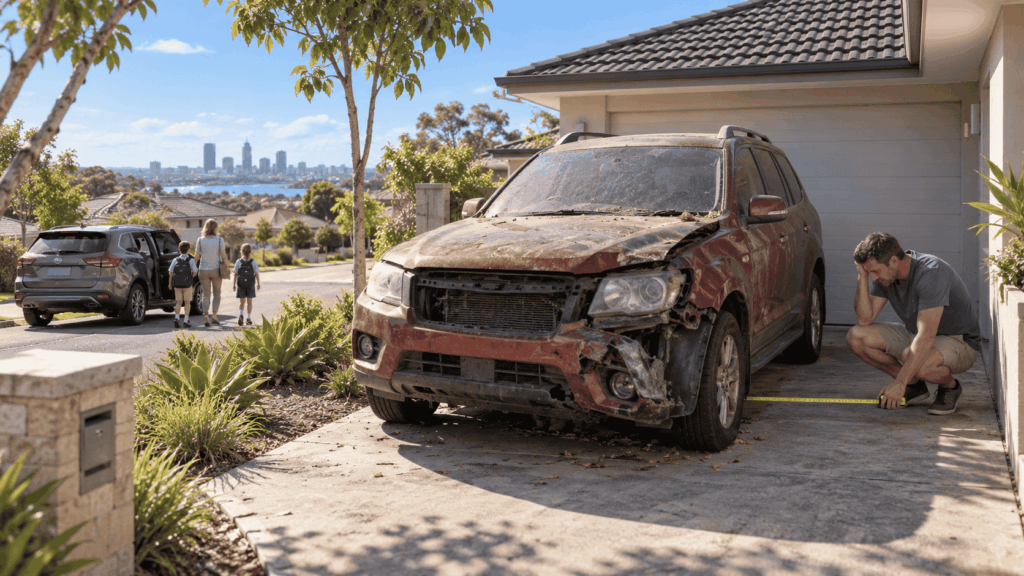
The process is simpler than most people expect. You call, describe the car — make, model, condition, whether it runs — and get a quote over the phone. Towing is then arranged, often the same day, and calls made before midday can often be booked in within two to three hours.
Payment is made in cash or by instant OSKO transfer before the car leaves your property, so there’s no waiting for funds to clear afterwards. The car is then taken to a licensed wrecking yard to be dismantled and recycled properly.
Getting It Off Your Property
Cash For Cars Perth buys running and non-running vehicles — including accident-damaged, flood or fire-damaged, deregistered, and written-off cars, utes, trucks, vans, and 4WDs, in any condition — and pays up to $9,999 depending on the vehicle. The business covers the entire Perth metro area, operating from a licensed wrecking yard at 5 Hantke Place, Welshpool (it doesn’t service Bunbury or areas further south).
If a damaged car on your property is costing you money, space, and a bit of the environment around it, it’s worth finding out what it’s worth before it loses any more value. Call 0420 262 651 between 7:30 AM and 6:00 PM, Monday to Saturday, for a free quote and same-day towing.