


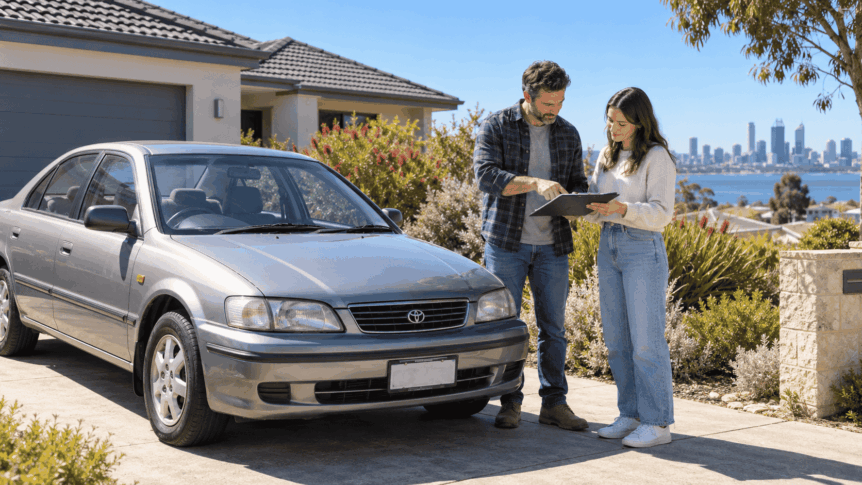
Yes, you can sell a car with no roadworthy certificate in WA. Private sellers are not required to arrange a roadworthiness check before selling. That does not mean every car is safe to drive, or that a sale removes an existing inspection requirement.
If you have an broken car in the driveway, start by separating three questions: can you sell it, can its vehicle licence be transferred, and can the buyer drive it away? The answers depend on its licensing status and condition.
The Short Answer: No Roadworthy Certificate Required for a Private Sale
A normal private sale of a second-hand car does not require the seller to obtain a roadworthy certificate. WA Consumer Protection says checking roadworthiness is the buyer’s responsibility. A buyer can review the service history and arrange an independent mechanical inspection before deciding whether to proceed.
An inspection can still help a sale if the buyer wants reassurance. It is a way to understand the car’s condition, rather than a certificate every private seller must supply. Be clear about known faults instead of describing an unchecked vehicle as mechanically sound.
For a WA-licensed vehicle, the seller must notify the Department of Transport and Major Infrastructure within seven days and provide the new owner’s name and address. DoTDirect is available for eligible transfers; otherwise, use the MR9 form. Transfers to or from a company cannot be completed online. Selling without a certificate does not remove those notification obligations.

When Does a Car Still Need an Inspection in WA?
A private sale and an application to license a vehicle are different processes. Transport WA lists inspections for licensing, defect notices, certain modifications and licensing a repairable written-off vehicle. Interstate vehicles also need an inspection before they can be licensed in WA.
There is no general five-year-old-car inspection rule for ordinary private cars. Some vehicle categories require annual inspections, including taxis, rideshare vehicles, driving instructor vehicles and tow trucks. Transport WA sends a notification for an annual inspection requirement; the car’s age alone is not the rule described in that guidance.
If the licence has expired, check its status before agreeing to a handover. Our guide to selling an unregistered car covers that separate selling situation. Do not advertise an unlicensed vehicle as ready to drive away simply because no pre-sale roadworthy certificate is required.
For an unlicensed vehicle being taken to an inspection, Transport WA requires a temporary movement permit. A permit is for the specified movement; it does not fix unsafe brakes, steering or tyres. If you are unsure how the car should be moved, discuss transport with the inspection station or arrange collection by a suitable truck.
What If the Car Isn’t Roadworthy at All?
A dead engine, serious rust or crash damage changes the likely buyer, rather than creating a reason to promise repairs before anyone has assessed it. A private buyer seeking a daily driver will judge it differently from someone looking for a repair project or usable parts.
Describe the condition specifically: whether it starts, any diagnosed mechanical fault, missing components and the damage you know about. WA Consumer Protection advises clear communication about condition and warns that a seller may be held liable for knowingly withholding a serious defect.
What Buyers Can Check Without a Certificate
A missing certificate is not a diagnosis. For a Ford hatchback or sedan with a mechanical problem, a buyer can ask what was diagnosed, when the fault appeared and whether the car has been driven since. Those details are more useful than a vague description of “not roadworthy”.
Have the service history and any workshop reports available. Separate confirmed faults from suspicions: an engine that will not start has a symptom, but you may not know the cause. Let the buyer decide whether to arrange an independent mechanical inspection, as WA Consumer Protection recommends.
Agree what an inspection will involve before the appointment, especially if the vehicle cannot be moved easily. A buyer may want a mechanic to visit rather than take it for a drive. Keep your description of its condition consistent in the advertisement, messages and sale record, so both sides understand what is being handed over.
Choosing a Buyer and Arranging the Handover
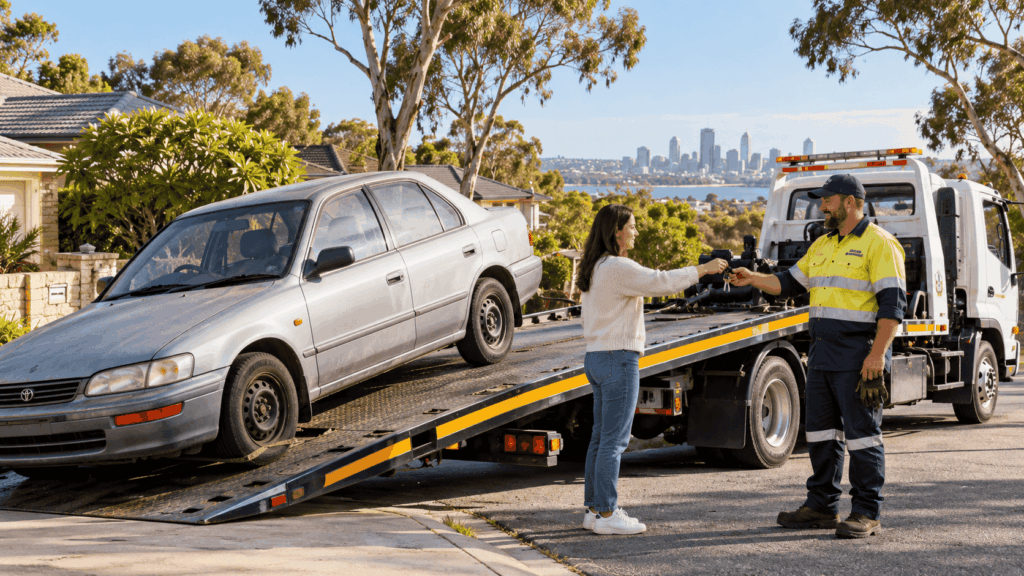
A running car with service records may suit a private sale. A vehicle that cannot be driven may suit a project buyer, wrecker or recycler. Wherever it is parked, including a home in Anketell, agree how it will be collected before accepting an offer. Explain restricted access and whether it can roll or steer.
Keep the absence of a certificate separate from the car’s actual history. If there is finance owing, speak to the lender about a payout and the sale arrangements. Consumer Protection explains that a lender may allow the sale with the loan balance paid from the proceeds. Finance is not simply a category of vehicle that can never be sold.
Do not remove ordinary plates on the assumption that every seller keeps them. Optional plates you want to retain must be exchanged through Transport WA before selling. Cancellation and an interstate sale have different plate requirements, so confirm which process applies. Keep a written record of the sale, and verify that payment has arrived before handing over the vehicle.
If repairs no longer make sense, our unwanted car removal service can help you work out whether collection is a suitable next step.