


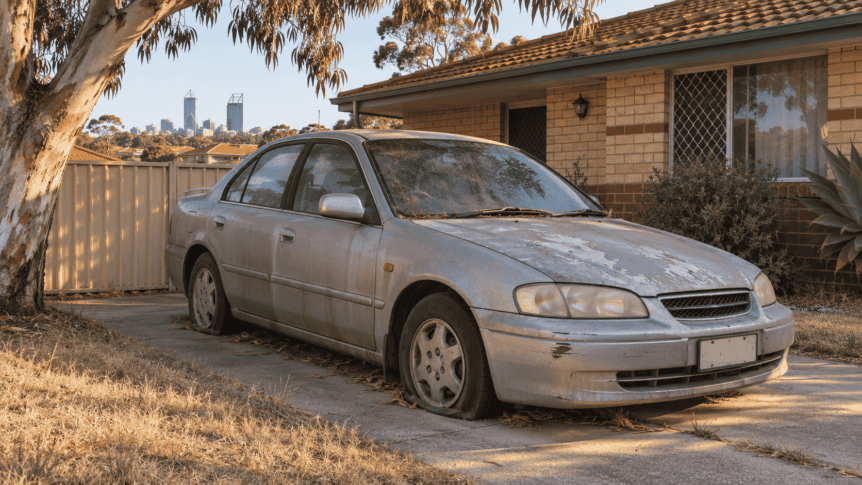
A car that hasn’t moved in months can look harmless enough – a bit of dust on the bonnet, maybe a flat tyre. But a stationary, ageing vehicle is rarely as inert as it looks. Underneath, it’s often quietly leaking fluids that were never meant to sit on open ground, and the longer it stays put, the further those fluids work into the soil beneath it.
If you’ve got a dead or dying car taking up space at a Perth property, it’s worth knowing what it’s doing to the ground it’s parked on – and what the more sustainable options look like.
What Actually Leaks From a Parked Car
A vehicle carries several litres of fluid across different systems, and each is a potential contaminant once a seal starts to fail:
- Engine oil – contains heavy metals and hydrocarbons that don’t break down quickly in soil.
- Coolant (antifreeze) – often contains ethylene glycol, which is toxic to plants, pets, and wildlife.
- Brake and transmission fluid – corrosive and slow to degrade.
- Battery acid – especially likely to leak once a battery has been sitting unused and corroding for a long period.
- Fuel – can evaporate or seep from an ageing tank or fuel lines, particularly after accident damage.
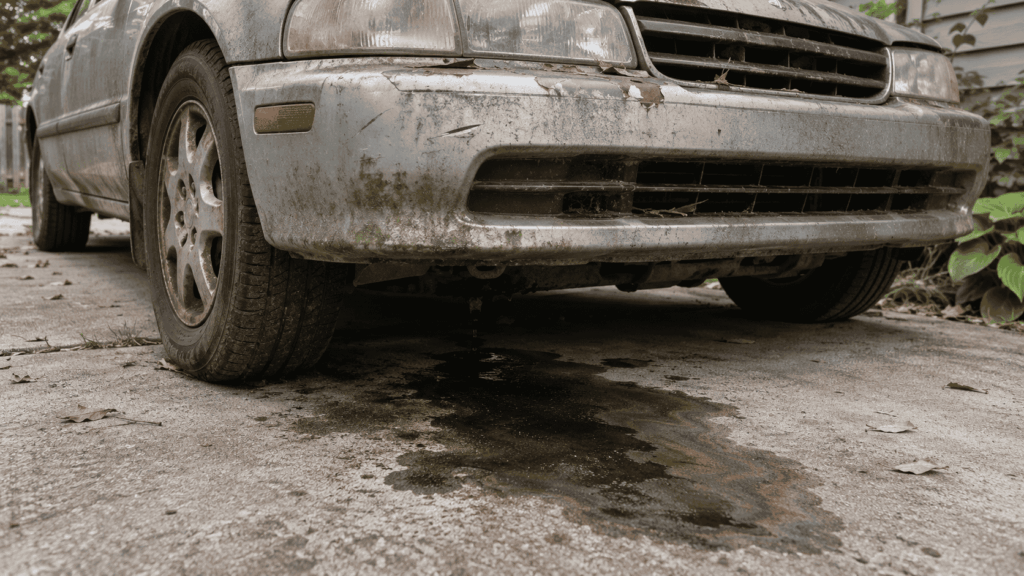
Individually, a slow drip might not seem like much. But a car parked in the same spot for a year or more has had plenty of time to turn small leaks into a genuinely contaminated patch of ground.
Why This Matters More in Perth
Perth sits on largely sandy, free-draining soil. That’s great for garden drainage, but it also means liquids move through the ground more readily than in denser clay soils, with less natural filtering along the way. Depending on the property, that can mean contaminants travel further and faster than expected – one more reason not to let a leaking vehicle sit indefinitely.
Beyond Fluids: Rust, Corrosion, and Wasted Materials
Fluid leaks are the most immediate issue, but not the only one. A car left to deteriorate outdoors also rusts, and rust flakes carry trace metals into the surrounding soil and stormwater over time. Meanwhile, every month a vehicle sits unused is a month its steel, aluminium, copper wiring, and other recyclable materials aren’t being recovered. A car isn’t just scrap metal – it’s a collection of materials that can be reclaimed properly if it ends up in the right place.
The More Sustainable Alternative
Sending an old vehicle to a licensed wrecking yard, rather than letting it break down in a driveway or paddock, is the more responsible option. A licensed facility drains and safely disposes of remaining fluids, removes usable parts for resale, and processes the rest for recycling – keeping contaminants out of the ground and materials out of landfill.
What Happens to the Car
Cash For Cars Perth operates a licensed wrecking yard at 5 Hantke Place, Welshpool, where vehicles are dismantled and recycled properly rather than left to deteriorate – whether the car still runs, has been sitting dead for years, or was written off after an accident, flood, or fire.
What Affects What You’re Offered
If you’re weighing up whether to sell, it helps to know what actually influences the value of an unwanted vehicle:
- Whether it runs or not – a driveable car is generally worth more than one that needs to be towed.
- Completeness – missing engine, transmission, or other major components lowers the offer.
- Make and model – some vehicles have parts and metal that are in higher demand than others.
- Extent of damage – accident, flood, or fire damage is factored in, but doesn’t rule a car out.
Cash For Cars Perth buys cars, utes, trucks, vans, and 4WDs in any condition – running or not, deregistered or written off – up to $9,999, across the Perth metro area. Note that the service covers metro Perth only, not Bunbury or further south.
A Few WA Rules Worth Knowing
Before you sell an unwanted vehicle in Western Australia, there are a few things the Department of Transport requires:
- Number plates stay with you, not the car – they’re attached to your name, not the vehicle.
- Lodge a Notification of Disposal with the WA Department of Transport once the sale is complete, to formally record you’re no longer the owner.
- Bring valid photo ID – it doesn’t need to be in the registered owner’s name, but ID is non-negotiable.
On the buying side, a licensed wrecker won’t purchase a stolen vehicle, a car still under finance, or a body without a chassis.
What to Expect When You Call
Once you decide to move a dead or unwanted car on, the process is fairly quick. Cash For Cars Perth offers free same-day towing across the Perth metro area, often within two to three hours if you call before midday. Payment is made in cash or by instant OSKO bank transfer, before the car leaves your property, so there’s no waiting around for funds to clear afterwards.
Get It Off the Ground, For Good
A car sitting idle isn’t doing your soil, your garden, or your property any favours the longer it stays. If you’ve got a vehicle you’ve been meaning to deal with – running or not – call Cash For Cars Perth on 0420 262 651 for a free quote, or arrange same-day removal and get it recycled properly instead of left to leak.