


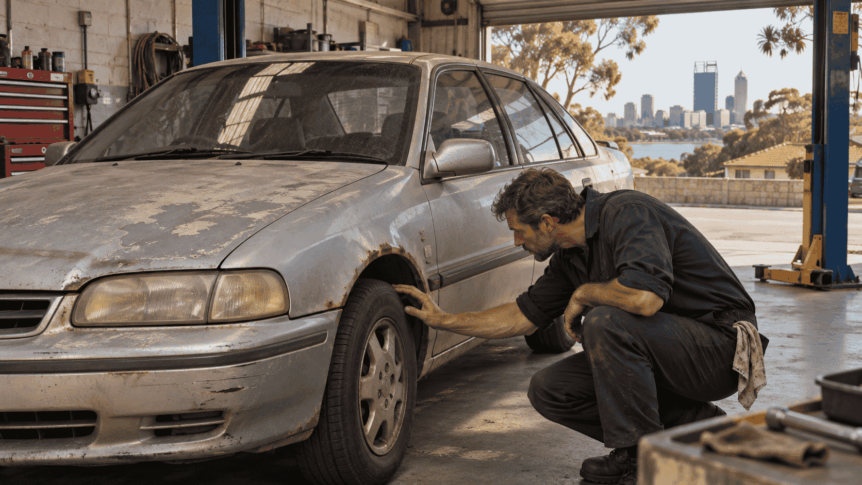
Most cars don’t become unsafe overnight. It’s usually a slow slide – a squeak that gets louder, a tyre that’s a bit smoother than it should be, a patch of rust you’ve been meaning to look at. On their own, small issues like these are manageable. Together, they can add up to a vehicle that’s no longer safe to have on Perth roads, whether you’re driving the Kwinana Freeway at peak hour or just doing the school run.
Here are five signs worth taking seriously, and what your options are once a car has genuinely reached the end of the road.
1. Your brakes need more than a routine service
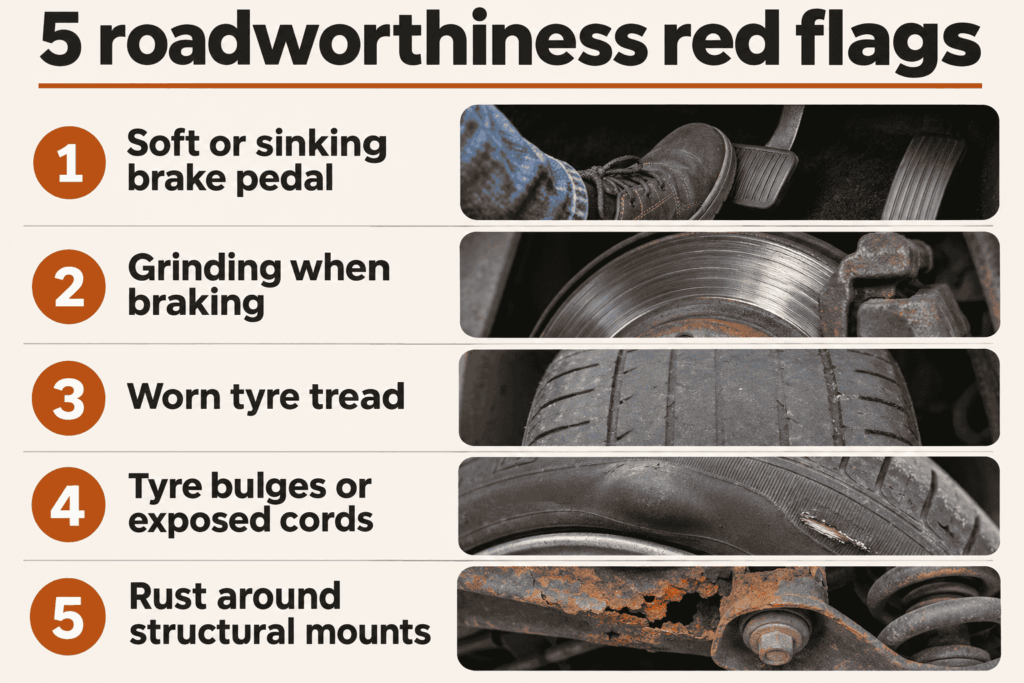
Brakes are one of the few things on a car where “it’ll be fine” can catch up with you fast. Watch for:
- Grinding, scraping or high-pitched squealing that doesn’t go away after a light rain
- A brake pedal that feels spongy, or sinks closer to the floor than it used to
- The car pulling to one side under braking
- Vibration through the pedal or steering wheel when slowing down
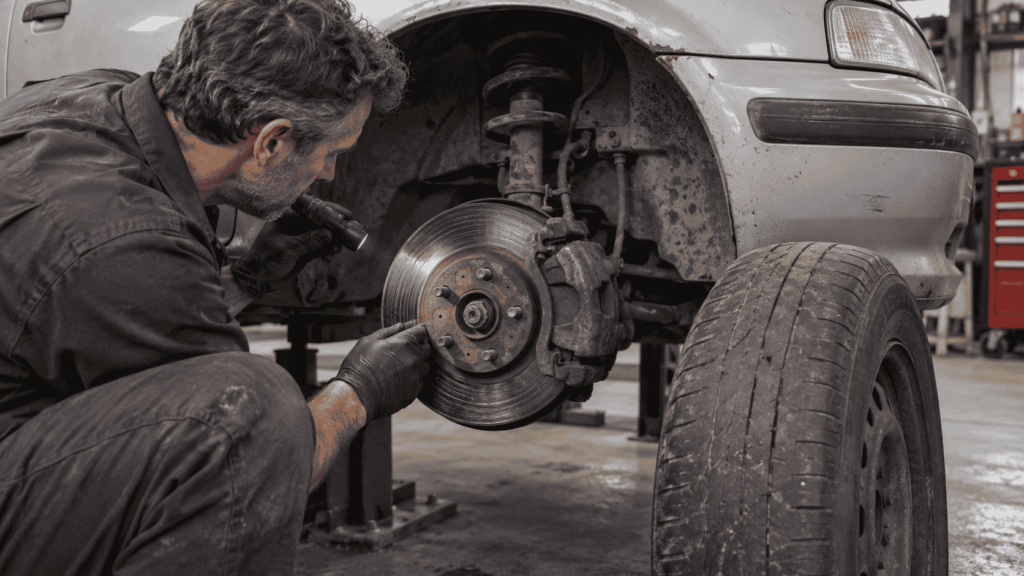
Pads and rotors are a normal wear item and usually an easy fix. But if a mechanic is telling you the calipers, brake lines or master cylinder are also on the way out, you’re looking at a repair bill that starts to compete with what the car is actually worth.
2. Your tyres are past their limit
Tyres are the only part of the car actually touching the road, and on a tired vehicle they’re often the most neglected item. Red flags include:
- Tread worn down near or below the legal minimum, especially unevenly across the tyre
- Cracking or perishing in the sidewall, particularly on a car that hasn’t moved much
- Bulges or bubbles in the sidewall – a sign of internal damage that can lead to a blowout
- Mismatched tyres with very different tread depths or wear patterns front to back
If you’re replacing all four tyres on a car that also needs brake work, suspension work, or has other issues on this list, it’s worth stepping back and asking whether that money is better spent on a car that isn’t already fighting you on multiple fronts.
3. Rust has moved from cosmetic to structural
Surface rust on panels is unsightly but rarely dangerous by itself. Structural rust is a different matter. Have a look underneath, or get a mechanic to during a service, and pay attention to:
- Rust on the chassis rails, floor pans, or sills (the structural rails under the doors)
- Rust around seatbelt mounting points or suspension mounts
- Bubbling paint or soft, spongy panels you can press a finger into
Rust in these areas compromises the parts of the car designed to protect you in a crash and to hold everything else together. Once it’s reached this stage, it’s generally not something that gets patched up – it gets managed, or the car gets retired.
4. Steering, suspension or handling has changed
A car that used to feel planted and now feels vague or unsettled is telling you something. Common warning signs include clunking over bumps, a steering wheel that’s off-centre, noticeable body roll in corners, or the car drifting on a straight, flat road when you take your hands off briefly. These point to worn bushes, ball joints, tie rods or shocks – all parts that directly affect how much control you have in an emergency.
5. The dashboard warning lights won’t stop
The occasional dash light after a cold start is normal. A car that’s regularly throwing warning lights, especially ones for the brakes, ABS, airbags or engine, and where the fault keeps returning after being cleared, is a car with an underlying problem that hasn’t actually been fixed – just reset.
What this means for registration and insurance
Beyond the safety side, an ageing vehicle with several of these issues can also become harder and more expensive to keep legally roadworthy and insured. At some point, the cost of getting a car back to a safe, compliant standard outweighs what the car is worth once it’s done.
If it’s time to let it go
If your car is ticking two or three of the boxes above, or the repair quotes have started to feel absurd relative to the car’s value, selling it for parts and scrap is often the more sensible option than pouring more money into it.
Cash For Cars Perth buys vehicles across the Perth metro area (we don’t currently service Bunbury or further south) in any condition – running, not running, accident-damaged, flood or fire-damaged, deregistered, or written off. We pay up to $9,999 depending on the vehicle, in cash or instant OSKO bank transfer, and payment happens before the car leaves your property. We can’t take stolen vehicles, cars still under finance, or bodies without a chassis, but almost everything else is fair game.
Towing is free, and if you call before midday we can often have someone out to collect the car the same day, usually within two to three hours.
What you’ll need on the day
- Valid photo ID (you don’t need to be the registered owner, but you do need ID)
- Your number plates removed – in WA, plates stay with you, not the car
- A few minutes afterward to lodge a Notification of Disposal with the WA Department of Transport, which is a seller’s responsibility once the car changes hands
We’re based at 5 Hantke Place, Welshpool, a licensed wrecking yard where vehicles are properly dismantled and recycled rather than left to rust in a paddock somewhere. We’re open Monday to Saturday, 7:30 AM to 6:00 PM.
If your car is showing any of the signs above and you’d rather not gamble on it, give us a call on 0420 262 651 for a free quote, or get in touch to book same-day removal.