


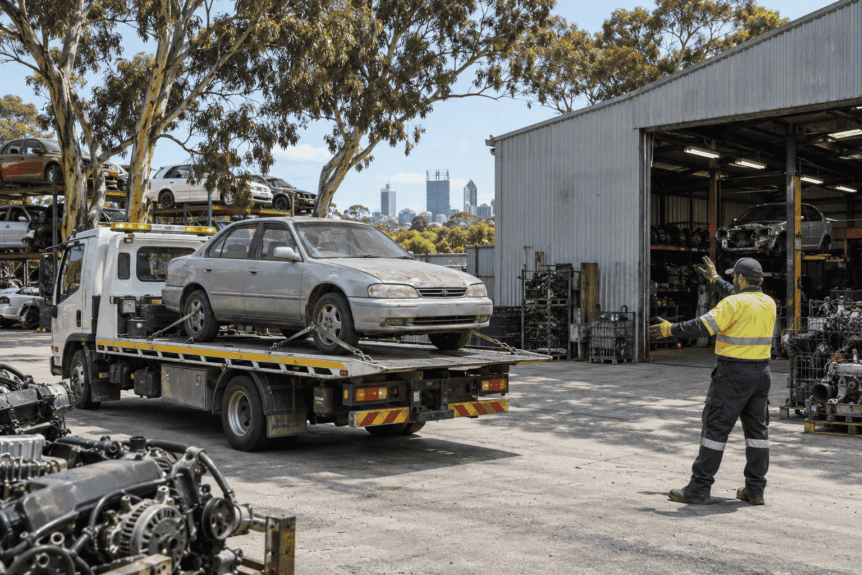
When an old car finally gets towed away from a Perth driveway, most owners never think about it again. But that vehicle doesn’t just disappear – it goes through a fairly involved process of stripping, sorting, and recycling before what’s left is turned back into raw material. If you’re weighing up whether to sell an old, damaged, or unwanted car, it helps to know what actually happens to it once it leaves your property, and why that process matters more than it might seem.
From the Driveway to the Yard
The process starts with a tow truck, not a workshop. For most Perth metro sellers, a car removal company like Cash For Cars Perth will arrange free same-day towing – often within two to three hours if you call before midday on 0420 262 651. The car is driven or winched onto a flatbed or tilt-tray truck and taken to a licensed wrecking yard, in this case at 5 Hantke Place, Welshpool, rather than to a scrap metal dealer or a general tip.
That distinction matters. A licensed wrecker is set up to handle vehicles safely and legally, including cars that don’t run, have been in accidents, or have fire or flood damage. A backyard operation or an unlicensed scrap collector often isn’t equipped to do this properly.
What Actually Happens to Your Car
Fluids and Hazardous Materials Come Out First
Before anything else happens, the vehicle is depolluted. Engine oil, coolant, brake fluid, fuel, air conditioning refrigerant, and battery acid are all drained and stored separately. This step exists specifically to stop these substances leaching into soil or stormwater drains, which is one of the more serious environmental risks of an abandoned or badly stored vehicle.
Reusable Parts Are Stripped Out
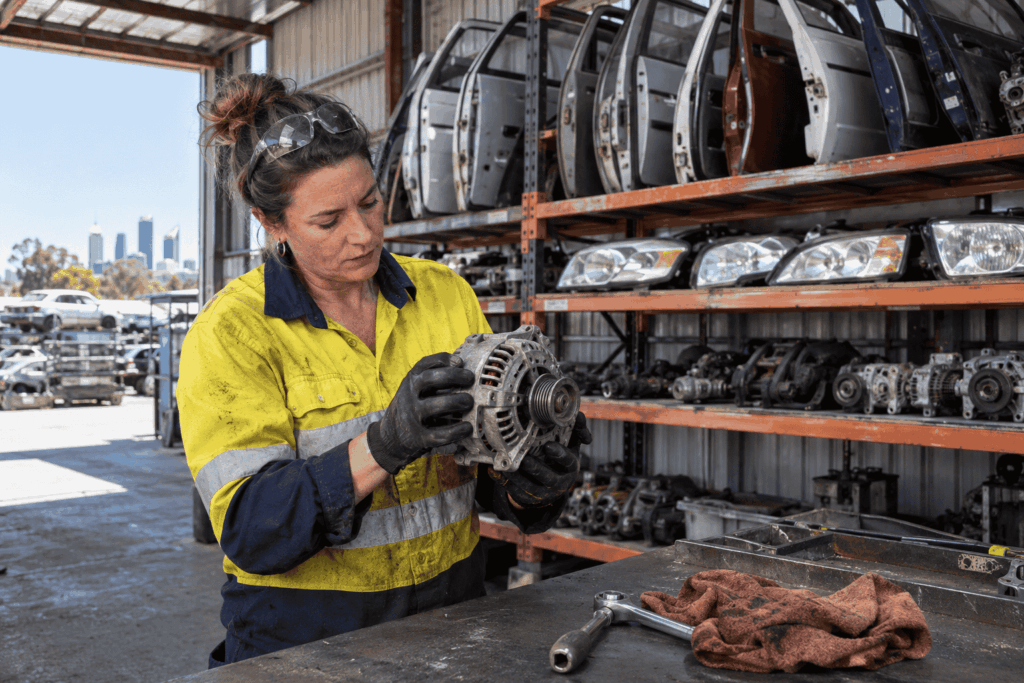
Next, anything with resale value is removed by hand – alternators, starter motors, doors, panels, mirrors, seats, gearboxes, and engines that are still in reasonable condition. These parts are cleaned, tested where relevant, and sold on to mechanics, panel beaters, and other repairers around Perth. This is a big part of why wrecking yards can pay for cars that don’t run at all: a non-running vehicle can still have plenty of parts worth salvaging.
What’s Left Goes to Metal Recycling
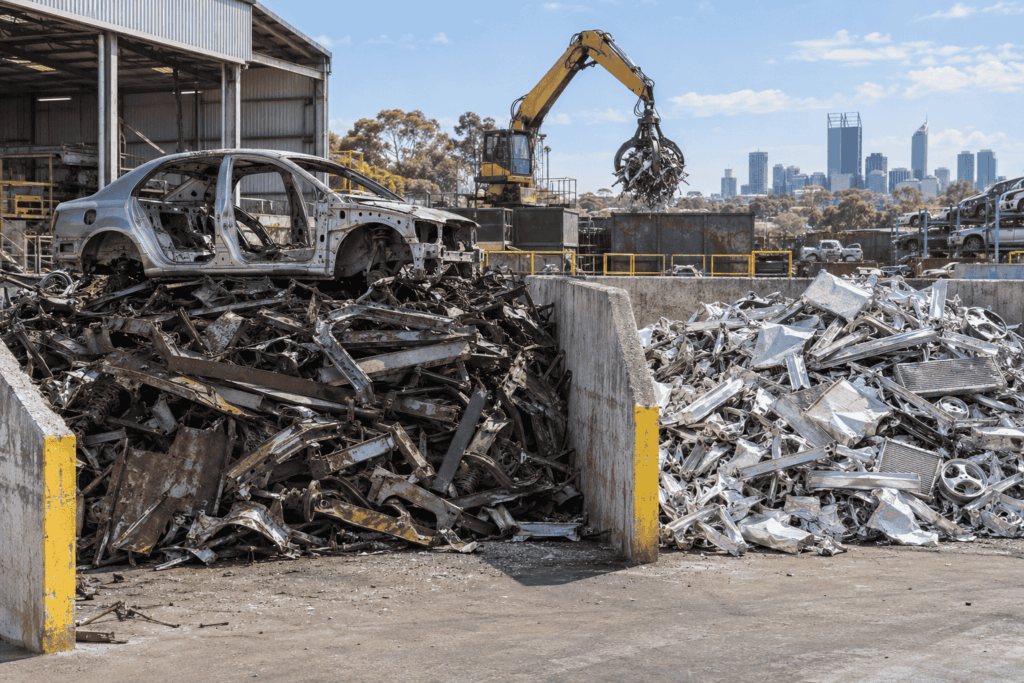
Once the usable parts and fluids are gone, the remaining shell is mostly steel, along with some aluminium and other metals. This gets crushed and sent on to metal recyclers, where it’s melted down and turned into raw material for new products – anything from construction steel to new vehicle parts. Tyres, glass, and other materials are separated out and handled through their own recycling or disposal streams.
Why This Matters for Perth’s Environment
An old car left sitting on a verge or in a paddock isn’t neutral – it slowly leaks fluids, rusts, and becomes a home for pests. Processing it through a proper wrecking yard means those fluids are contained and disposed of correctly, the metal is recovered instead of going to landfill, and usable parts get a second life rather than being replaced with newly manufactured ones. It’s a fairly unglamorous form of recycling compared to household kerbside collection, but the volume of steel and other materials recovered from end-of-life vehicles makes it a meaningful part of how Perth manages waste.
What Affects What Your Car Is Worth
Not every car is worth the same, even within a wrecking process. A few things tend to make the biggest difference:
- Completeness – a car with the engine, transmission, and major parts intact is worth more than one that’s already been stripped.
- Make and model – parts from popular makes are easier to sell on, which can affect what a wrecker is willing to pay.
- Overall weight and metal content – heavier vehicles like utes, vans, and 4WDs generally yield more recoverable steel than small hatchbacks.
- Condition of the body – accident damage, flood or fire damage, and rust all factor in, though none of these rule a car out.
Cash For Cars Perth buys cars, utes, trucks, vans, and 4WDs in any condition – running or not, deregistered or written off – and pays up to $9,999 depending on these factors, with payment made in cash or by instant OSKO bank transfer before the car leaves your property.
The Paperwork Perth Sellers Shouldn’t Skip
Selling a car for wrecking in WA comes with a couple of specific rules worth knowing:
- Number plates stay with you. They’re attached to the registered owner, not the vehicle, so they should be removed before the car is towed.
- You need to lodge a Notification of Disposal with the WA Department of Transport after the sale. This officially takes the vehicle off your name and protects you from any future liability connected to it.
- You’ll need valid photo ID to complete the sale, though you don’t need to be the registered owner to sell the car.
What a Wrecking Yard Won’t Take
A licensed wrecker can’t legally accept every vehicle. Generally excluded are stolen vehicles, cars still under finance, and bodies without a chassis. If you’re unsure whether your car fits the criteria, it’s worth asking before towing is arranged.
Ready to Move It On?
If you’ve got a car sitting idle anywhere in the Perth metro area – running or not – it’s worth finding out what it’s worth before it costs you any more in rego, storage, or space. Cash For Cars Perth is open Monday to Saturday, 7:30 AM to 6:00 PM, and offers free same-day towing across Perth metro (excluding Bunbury and further south). Call 0420 262 651 for a quote, or get in touch to arrange a same-day pickup.