


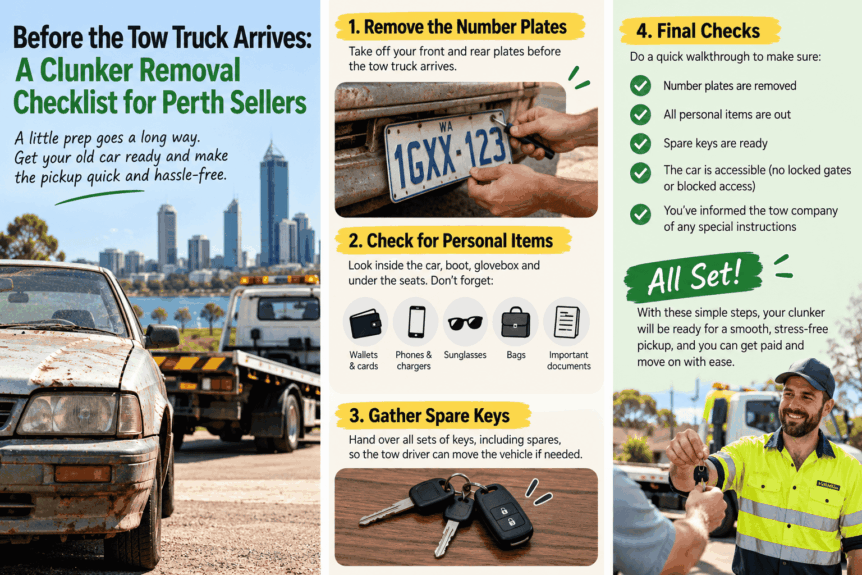
Selling an old car for removal is usually the easy part. What catches people out is the half hour before the truck arrives: the spare key in a kitchen drawer, the garage remote clipped to the visor, or the paperwork nobody has checked. This clunker removal checklist covers what to prepare, what to take out and what to confirm before collection.
If you have already arranged collection of your clunker, work through the checks below before the agreed pickup window. Keep the buyer’s contact details handy so you can flag access problems or changes to the car’s condition early.
Sort the paperwork first
Check the licence and number plates
Check whether the vehicle is still licensed and confirm whether it is being sold as a licensed vehicle or being taken away for dismantling. These are different situations; do not assume that every removal follows the same transfer process.
If you voluntarily cancel a WA vehicle licence, the Department of Transport and Major Infrastructure (DTMI) requires the plates to be surrendered. A refund of the remaining licence fees may be available. If you want to retain optional plates, check the department’s retention or exchange process before handing over the car. Simply keeping plates in a drawer is not a substitute for completing the required process.
Check whether a Notification of Disposal applies
When you sell or dispose of a WA licensed vehicle, you must notify DTMI within seven days and provide the new owner’s name and address. Eligible transfers can be completed through DoTDirect; an MR9 form is available when an online transfer cannot be used. Confirm the appropriate process with DTMI if the vehicle licence is being cancelled instead.
Record the vehicle identification number, plate number, buyer’s details and collection date before the truck leaves. Keep the sale receipt and any cancellation or transfer confirmation together so you can find them later.
ID, ownership and finance
Have photo ID ready and ask the buyer which ownership documents they need. If you are acting for someone else, agree in advance what authority they will require. Finding a car on a property or holding its keys does not, by itself, establish that you can sell it.
Tell the buyer about any outstanding finance before booking. Resolve questions about ownership or a lender’s interest before collection rather than leaving them for the driver to sort out on the driveway.
Empty the car properly
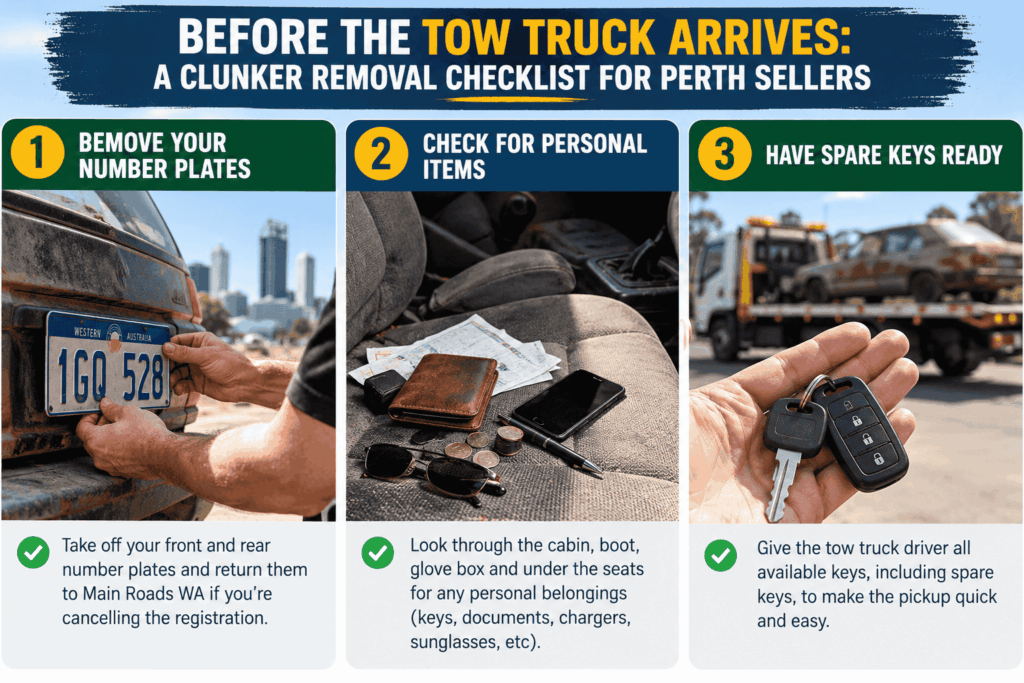
Once a vehicle reaches a wrecking yard it may be dismantled, so do a slow lap with the doors open rather than a quick glance. Check the places you used every day as well as the compartments you rarely opened.
- Glovebox and centre console: service books, sunglasses, loose cash and USB sticks.
- Under and between the seats: phones, cards and anything that has slipped down the sides.
- Boot and spare wheel well: tools, jumper leads, camping gear and personal belongings.
- Sun visors and door pockets: garage remotes, SmartRider cards, parking permits and gate fobs.
- Personal documents: anything with your name, address or account details on it.
Check dash cams for memory cards and remove paired phones or saved addresses from the infotainment system where possible. Ask your insurer when cover should end and arrange that around the actual handover, allowing for a delayed collection.
Gather the keys and agree what stays
Round up every key you have, including the spare in the drawer and the one on your partner’s keyring. For an older Saab being collected, give the buyer its exact model and describe whether the key unlocks the doors and turns in the ignition. The same practical check applies to any make; tell the driver if the car cannot be unlocked or steered.
Set aside any roof racks, bike carriers, garage remotes or other accessories you intend to keep, and agree exclusions with the buyer. Do not remove an item included in the accepted offer without checking first. Keep the spare wheel and tools with the vehicle if that was part of the agreement.
There is a difference between taking out personal belongings and removing and selling parts. Taking the battery, wheels or other components can change the agreed condition and make loading harder. If parts are already missing, send current photos before pickup so the buyer and driver know what they are collecting.
Leave loose parts safely secured and tell the driver where they are. Do not crawl underneath an unstable vehicle or attempt repairs just to make collection easier.
Clear the way for the truck
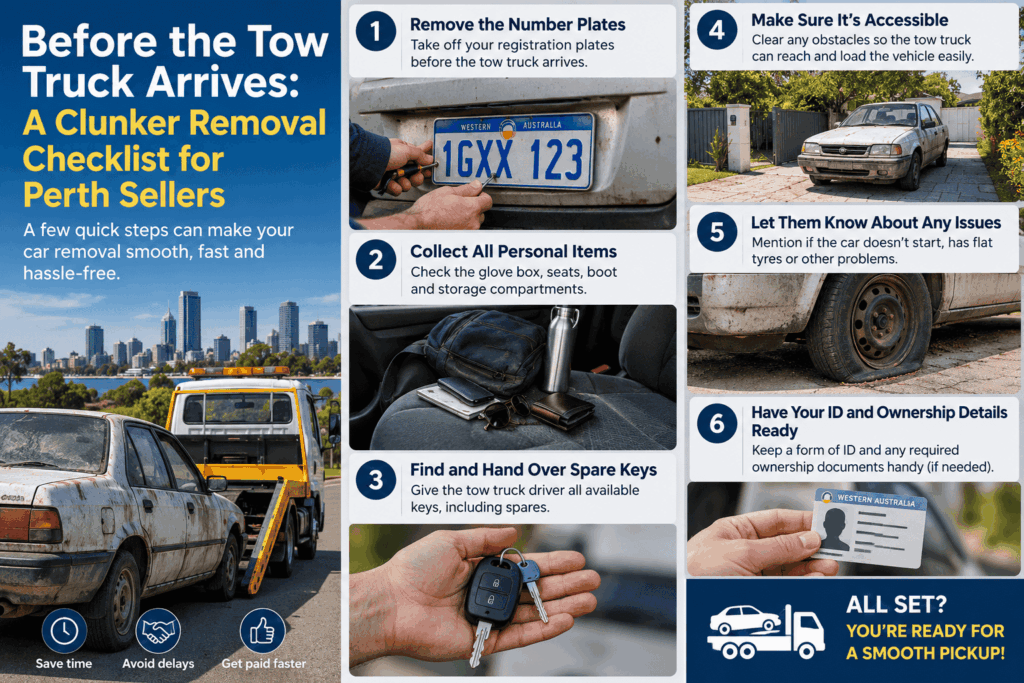
Tow trucks need room to approach and load. Move other cars off the driveway, unlock gates and clear bins, trailers or garden waste from around the vehicle. Mention flat tyres, seized brakes, missing wheels or a car parked nose-in against a fence when booking; the operator needs to assess the equipment and access.
For a pickup in Bayswater, for example, describe a narrow driveway or shared access before collection and send a photo of the route out. Include gate width, overhead obstructions and any slope rather than assuming the truck can reach the car because a passenger vehicle fits.
If the car is in a strata complex, coordinate access with the relevant contact. Keep children and pets away from the loading area, and let the operator direct the movement of the vehicle.
What the day itself looks like
Have the keys, agreed documents and buyer’s details ready when the driver arrives. Walk around the car together and confirm that its condition matches the booking, including any missing components or changes since you accepted the offer.
Confirm the payment amount and method before loading, and check that payment has been received rather than relying on a screenshot. Ask for a receipt identifying the buyer, vehicle and date. Keep a copy with your handover photos and licensing records.
Ready when you are
Car emptied, keys gathered, paperwork checked and access clear: those are the useful final checks. Keep time after collection to finish any applicable licensing steps and confirm your insurance arrangements.
If the vehicle cannot be driven, the undrivable vehicle collection service explains the available help; Cash for Cars Perth can confirm pickup arrangements on 0420 262 651.