


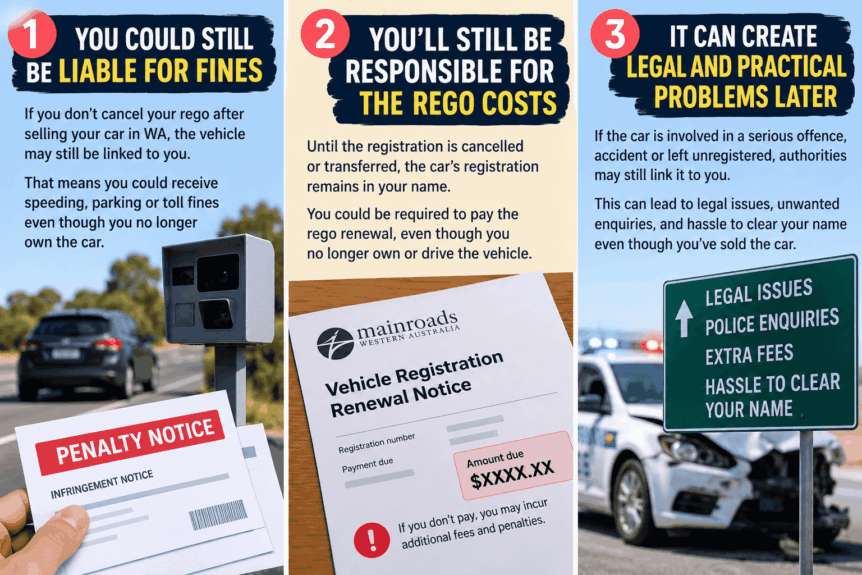
If you don’t cancel your rego after selling a car in WA, the first question is whether cancellation was needed at all. Selling a licensed vehicle and cancelling its licence are different processes. The important seller obligation is notifying the Department of Transport and Major Infrastructure (DTMI) about the change of ownership. Missing that step can lead to a penalty and notices that you need to resolve.
A private sale of a used car that will stay licensed needs a transfer process; a car being permanently taken off the road needs its licence status considered separately. Handing over keys or receiving payment does not, by itself, settle the government record.
The Legal Requirement Most Sellers Forget
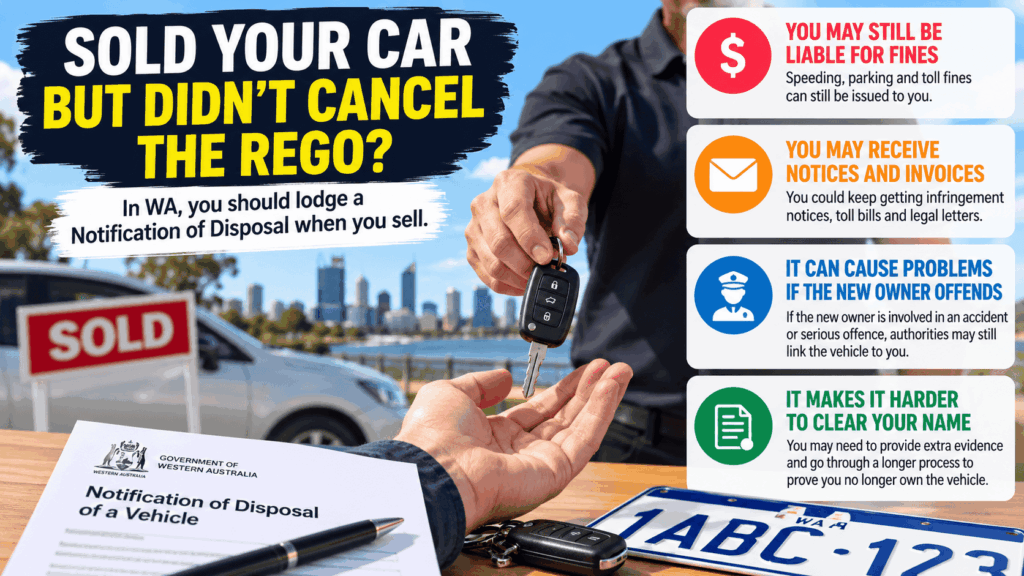
For a WA licensed vehicle, the seller must notify DTMI within seven days of sale or disposal and provide the new owner’s name and address. Don’t rely on the buyer’s promise to sort everything out later: the seller has their own notification obligation.
Keep the sale receipt, buyer details and a copy of your submission together. A dated record is much easier to find now than after an unexpected letter arrives. Check that names, the vehicle registration and the handover date match across your documents.
What Actually Happens If You Don’t Lodge It
A Penalty for Missing the Notification
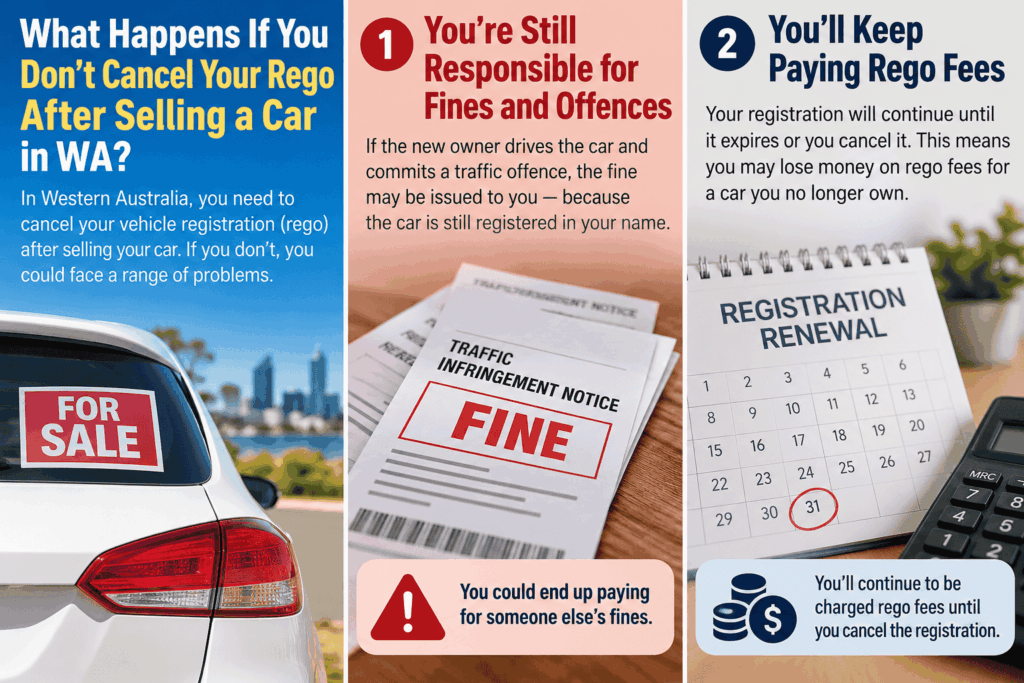
Failure to notify DTMI within the required period can result in a vehicle infringement. This is separate from any driving offence the buyer might commit. If the deadline has passed, contact DTMI about completing the outstanding notification rather than waiting for a renewal reminder.
Fines Can Still Reach You
For speed and red-light camera offences, the first infringement notice is issued to the registered owner identified through the vehicle. If the records have not caught up with a sale, you may need to show that the vehicle had already changed hands. Don’t ignore a notice simply because you were not driving.
Once you have dealt with any notice already issued, check the underlying sale notification too. Our notification of disposal guide covers the lodgement process; this article focuses on what can go wrong when that step is missed.
Renewal Letters Need Checking
A renewal letter after handover is a reason to check the vehicle record, not evidence on its own that you owe every future registration cost. Compare the sale date with the letter and ask DTMI to clarify the status. Avoid paying or discarding correspondence without understanding what it relates to.
The distinction applies whether you are selling a small Citroen hatchback for continued use or handing over an older vehicle for dismantling. Make and model describe the car; they don’t tell you whether its licence is being transferred or cancelled. Agree what is happening before collection.
What to Do If a Fine Arrives After the Sale
Read the issuing authority’s instructions and the deadline on the notice. For a traffic infringement concerning a vehicle sold before the alleged incident, DTMI provides a Vehicle Sold Advice process in DoTDirect. You can open the infringement, choose the driver-identification option and supply the purchaser’s details.
Have the receipt and buyer information ready. If you cannot provide all the purchaser’s details, contact Infringement Services rather than guessing. Keep the submission confirmation and any follow-up correspondence so you can track the matter through to resolution.
Transfer, Cancellation and Number Plates Are Different
It is incorrect to say WA sellers must always remove and keep the plates. DTMI has separate rules for retaining or transferring particular plates. For example, retaining state or district plates when selling requires arranging replacement plates. Check your plate type and intended transaction before removing anything.
For a collection from a driveway in Champion Lakes, settle the buyer details, receipt and plate arrangements before the tow truck loads the car. The collection address belongs on your handover records; it does not change which licensing process applies.
Voluntary cancellation normally involves surrendering the number plates. Lost or stolen plates require the relevant declaration, and remaining plates must be returned. Cancellation may also allow an application for a refund of the unused licence period. Keep the plate receipt and ask DTMI about your circumstances.
Selling to a Wrecker Still Needs a Clear Paper Trail
Before collection, ask the buyer to confirm their legal name and contact details for the receipt. Record which vehicle was collected and when. Keep your own copies rather than assuming a towing docket or a conversation with the driver completes every licensing requirement.
Cash For Cars Perth is based at 5 Hantke Place, Welshpool. A collection arranged through a business still needs clear agreement about what each party is doing. If the vehicle is being dismantled, confirm its licence and plate arrangements before it leaves your property.
Before You Close the File on the Sale
Check that you have a dated receipt, accurate buyer details and confirmation of the notification or cancellation steps relevant to your transaction. Save them somewhere you can retrieve later. If a notice arrives, respond through its issuing authority and use those records to explain the sale.
If you are arranging collection of a scrap car, call 0420 262 651 to discuss the handover and receipt details before pickup.