


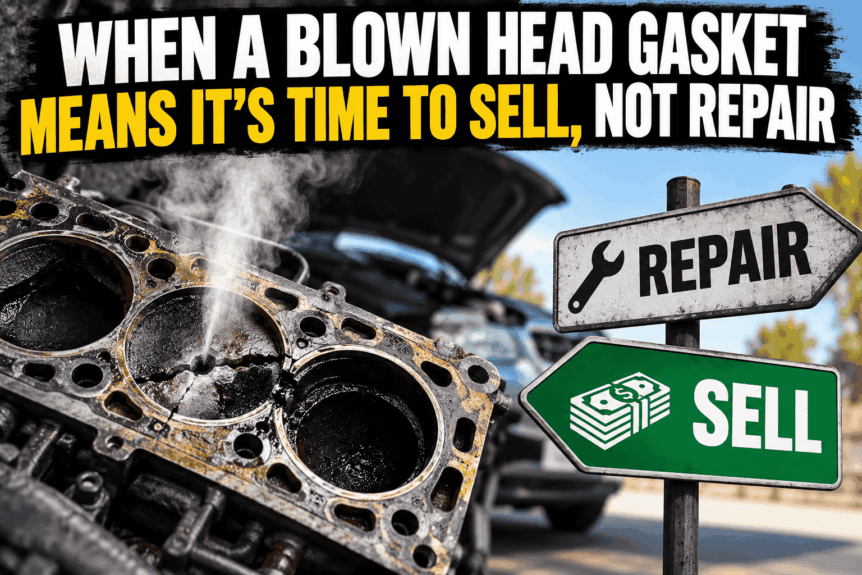
If you’ve just been told your head gasket has gone, you’re probably weighing up two numbers: what the repair will cost, and what the car is actually worth. For a lot of Perth car owners, that comparison is the moment an ageing daily driver quietly becomes a car that’s better off sold than saved.
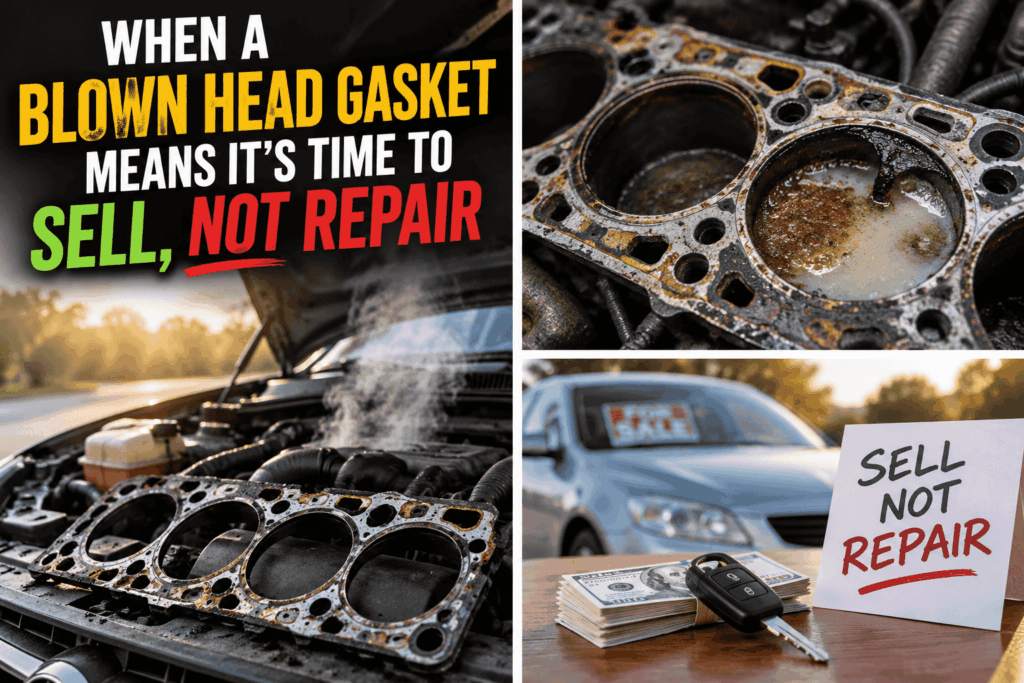
A blown head gasket usually shows up as white smoke from the exhaust, coolant disappearing with no visible leak, a milky film in the oil, or the engine running hot and losing power. On its own, it’s a serious repair. Combined with an older engine, high kilometres, or a car that already has a few other issues, it’s often the point where the maths stops working in the repair’s favour.
What It Actually Takes to Fix One
A head gasket isn’t a bolt-on part. Fixing it properly means pulling the cylinder head off the engine, checking it for warping (which is common if the car ran hot for any length of time before the fault was picked up), machining it flat if needed, and reassembling everything with new gaskets, seals, and often new head bolts. It’s a labour-heavy job, not a parts-heavy one, which is why the bill can climb even on a car with a cheap gasket kit.
Costs vary a lot depending on the engine layout, whether the head needs machining, and whether the workshop finds additional damage once it’s opened up. It’s worth getting an actual written quote from a mechanic before deciding anything, rather than working off a rough figure.
The Hidden Risk: Damage Beyond the Gasket Itself
The real cost blowout usually isn’t the gasket – it’s what overheating did on the way there. A warped or cracked head, a damaged head bolt thread, or coolant that made its way into the engine oil can all mean extra repairs once the mechanic is in there. This is why a head gasket quote sometimes turns into a much bigger number after the car’s already been booked in and partly stripped down.
Why the Repair Bill Rarely Stacks Up on an Older Car
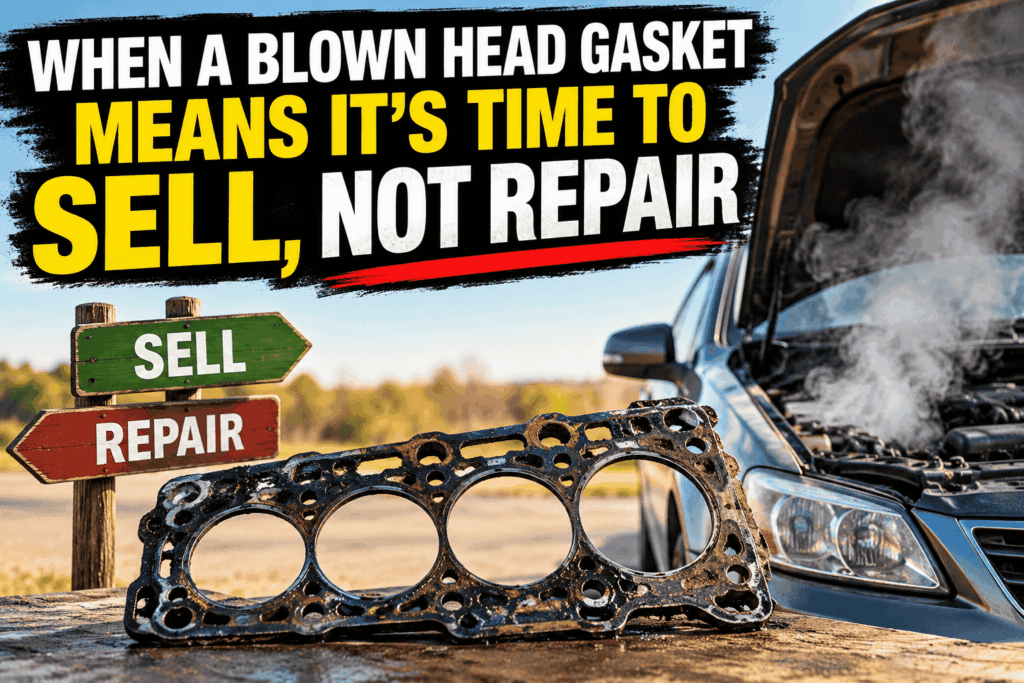
The question isn’t just “can this be fixed” – almost anything can be fixed. It’s whether the repair cost, plus the risk of further issues turning up, is less than what the car is actually worth afterwards. On a car that’s already got some age, kilometres, or wear on it, a head gasket repair can easily cost more than the car would sell for once it’s running again. At that point, you’re not really fixing an asset – you’re funding a repair bill that the car’s resale value will never pay back.
What Affects the Cash Value of a Car With a Blown Head Gasket
Even with a dead engine, a car still has value as a whole vehicle for dismantling and recycling. A few things influence what a wrecking yard will offer:
- Make and model – some vehicles have parts that are consistently in demand, which supports a higher offer.
- Overall condition – panels, interior, tyres, and whether other mechanical components are sound.
- Completeness – a car with parts already stripped or missing is worth less than one that’s intact.
- Weight and metal content – larger vehicles like utes, vans, and 4WDs often carry more scrap and parts value.
- Whether it’s driveable – a non-runner isn’t a problem for a wrecker with its own tow truck, but it’s a factor in the assessment.
A blown head gasket by itself doesn’t write a car off financially – it’s the combination of that repair cost against everything else the car has going for (or against) it that determines whether selling makes more sense than fixing.
Selling As-Is: What to Expect
If you decide the repair isn’t worth it, selling a car with a blown head gasket is usually simpler than people expect. A quote can be given over the phone based on the make, model, and condition of the car, and if you accept, towing is arranged – often within 2–3 hours if you call before midday. There’s no need to get the car running, drive it anywhere, or clean it up first.
Payment is made in cash or by instant OSKO bank transfer before the car leaves your property, so you’re not waiting on a transfer to clear or chasing payment after the tow truck’s gone.
WA Paperwork You Still Need to Handle
Selling a car in Western Australia comes with a couple of obligations that are easy to overlook when you’re just glad to see the back of a broken-down vehicle:
- Number plates stay with you, not the car – they don’t get handed over to the buyer or wrecker.
- You need to lodge a Notification of Disposal with the WA Department of Transport after the sale, to formally record that you’re no longer the registered owner.
- Valid photo ID is required to sell the vehicle, though you don’t need to be the registered owner on the paperwork to do so.
What Gets Bought, and What Doesn’t
Cash For Cars Perth buys cars, utes, trucks, vans, and 4WDs of any make and in any condition – running, non-running, accident-damaged, flood or fire-damaged, deregistered, or written-off. What they won’t buy: stolen vehicles, cars still under finance, or bodies without a chassis. Coverage is Perth metro only – Bunbury and areas further south aren’t serviced.
The yard operates from 5 Hantke Place, Welshpool, as a licensed wrecking facility that dismantles and recycles vehicles rather than just moving them on, and is open Monday to Saturday, 7:30 AM to 6:00 PM.
Getting a Quote
If a head gasket repair quote has you doing the maths on whether it’s worth it, it costs nothing to find out what the car is worth as-is. Call 0420 262 651 for a quote, with free same-day towing available across the Perth metro area if you decide to go ahead.