


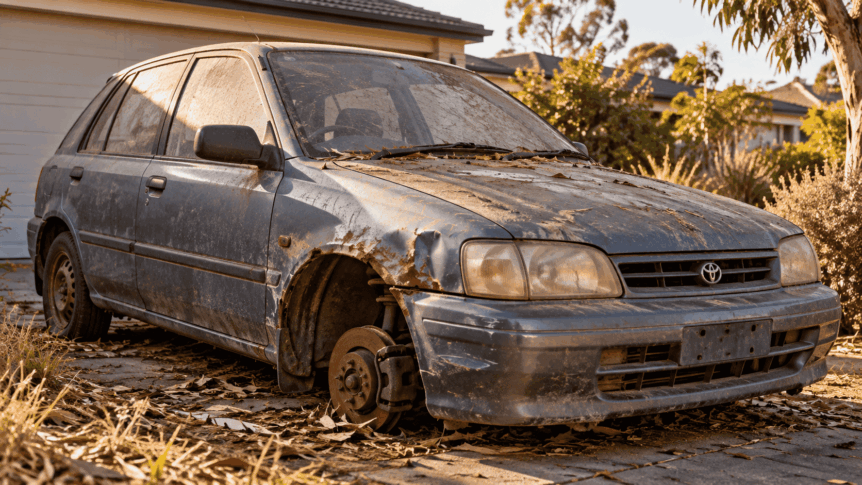
If you’ve got a damaged or unreliable car sitting in the driveway and you’re telling yourself you’ll deal with it “next month,” it’s worth knowing that the clock really is ticking on what that car is worth. A vehicle that’s worth a decent amount today can be worth noticeably less in a few months — not because anyone is trying to lowball you, but because of what actually happens to a stationary, damaged car over time. Here’s a rundown of the real factors at play, and what Perth owners should know before deciding to sell.
What Actually Happens to a Car’s Value Over Time
A car that isn’t being driven doesn’t just sit still — it deteriorates. Some of this happens fast, some of it happens slowly, but almost none of it works in your favour.
Rust and Weather Damage
Perth’s climate is relatively kind to cars compared to somewhere humid or coastal-salty, but exposed metal, chipped paint, and any area where water can pool (boots, sills, under carpets after a leak) will still corrode over time. Once rust sets in around structural points — chassis rails, floor pans, suspension mounts — it affects more than cosmetics. It can turn a straightforward repair into a write-off, or a wreck that’s harder to safely dismantle and part out, which affects what a wrecker can offer for it.
Batteries, Fluids and Seized Components
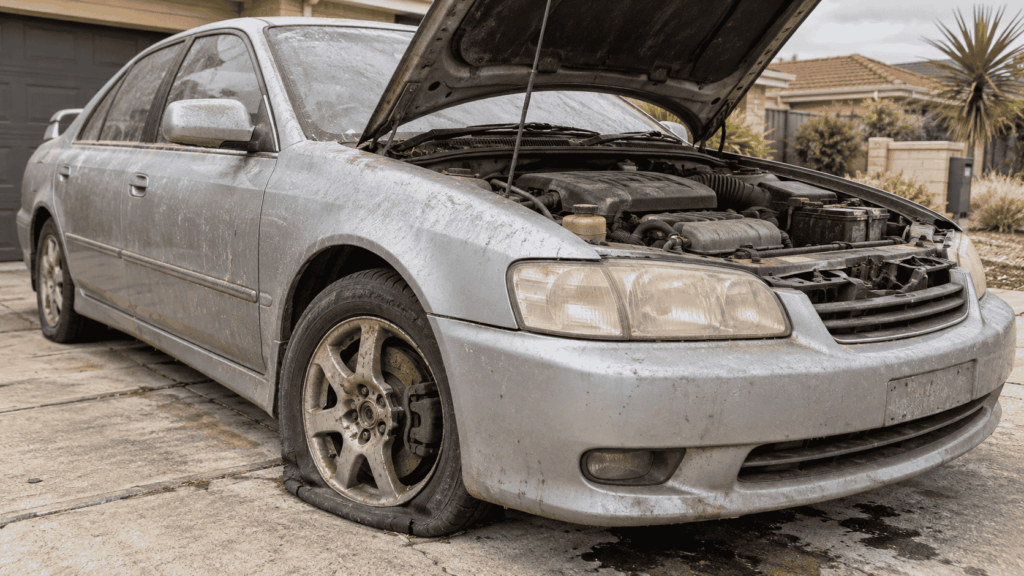
A car left sitting for weeks or months often won’t start even if the original fault was minor. Batteries go flat and lose capacity permanently if left discharged too long. Engine oil and brake fluid degrade and can allow internal corrosion. Handbrakes can seize onto rotors. Tyres develop flat spots or perish. None of this is dramatic on its own, but it adds up to a vehicle that’s harder to move, harder to test, and less useful for parts — all of which can bring the offer down.
Parts Cannibalisation and Theft
Cars parked on the street or in an accessible driveway, especially older or common models, are targets for opportunistic parts theft — batteries, wheels, catalytic converters, badges, mirrors. Every part that goes missing is value that doesn’t come back, and a car with obvious signs of tampering or missing components is worth less as a whole.
Scrap and Parts Market Prices Move
Wrecking and recycling businesses buy based partly on current scrap metal and used-parts values, and those prices fluctuate with the broader metals market. Waiting doesn’t guarantee prices will rise — it’s just as likely they’ll fall, and in the meantime your specific car is also losing condition, so you’re often stacking two downward pressures at once rather than one.
The Cost of Just Letting It Sit
Beyond the vehicle’s own condition, there are ongoing costs to keeping an unwanted car around. If it’s still registered, you’re paying licensing and possibly CTP insurance on a car you’re not using. If it’s taking up a driveway or garage space, that’s room you could use for something else. And if it’s visible from the street and looking worse for wear, some local councils can take an interest in vehicles that appear abandoned or are leaking fluids onto a verge.
WA Rules Worth Knowing Before You Sell
Selling a car in Western Australia comes with a couple of specific obligations that catch people out:
- Number plates stay with you. In WA, plates are linked to the owner, not the vehicle, so they don’t leave with the car when it’s sold or wrecked.
- You need to lodge a Notification of Disposal. After selling, the seller is required to notify the WA Department of Transport that the vehicle has changed hands, so it’s no longer registered to you and you’re not liable for it going forward.
- Photo ID is required. Whoever is selling the car needs valid photo identification on hand — it doesn’t have to be the person the car is registered to, but ID is checked as standard practice.
What To Expect When You Sell
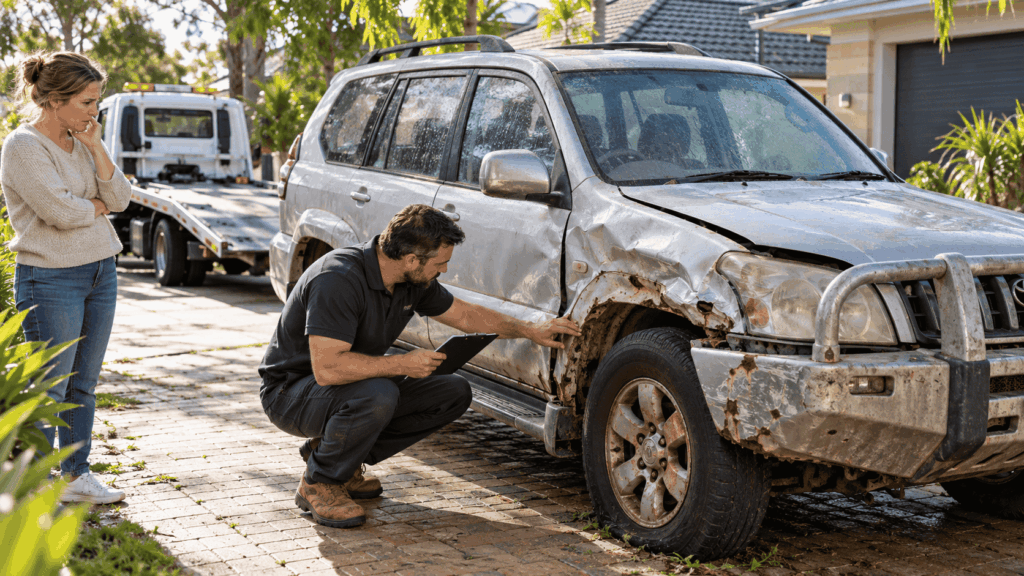
A reputable car removal service should be able to give you a value over the phone based on the make, model, and condition of the vehicle, arrange free towing, and pay on the spot — either cash or instant bank transfer — before the car leaves your property. There shouldn’t be hidden fees for towing, and you shouldn’t need to get the car running or move it yourself. Vehicles that are running, non-running, accident-damaged, flood or fire damaged, deregistered, or already written off can typically still be sold this way. The main exceptions are stolen vehicles, cars still under finance, and bodies without a chassis, which most licensed wreckers won’t be able to take.
Get It Off Your Hands Today
If your car has been sitting for a while, the most cost-effective time to sell it was probably a few weeks ago — the next best time is now, before rust, a flat battery, or a parts thief take any more value off the table. Cash For Cars Perth covers the entire Perth metro area (not Bunbury or further south), operates out of a licensed wrecking yard at 5 Hantke Place, Welshpool, and can often arrange same-day towing within two to three hours if you call before midday.
Call 0420 262 651 between 7:30 AM and 6:00 PM, Monday to Saturday, for a straightforward quote and same-day pickup — no obligation, and no need to fix anything up first.