


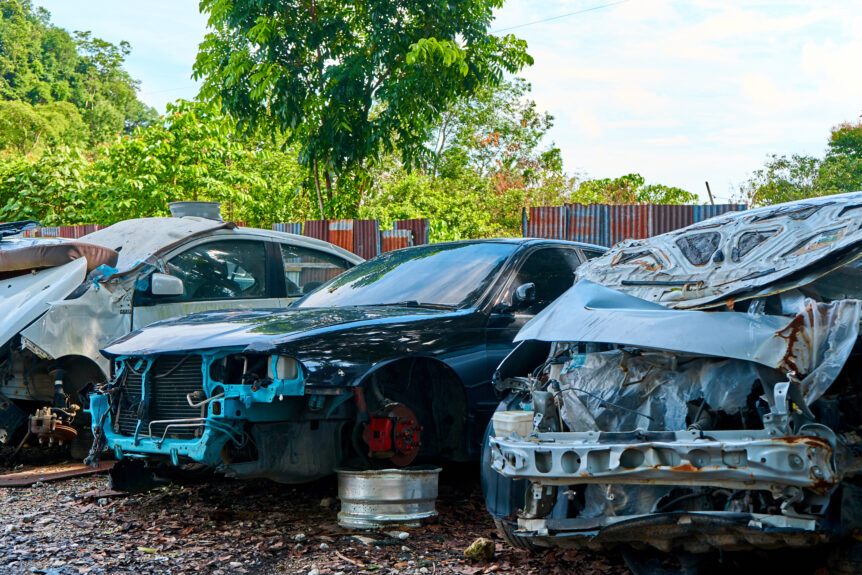
A damaged 4WD is an awkward thing to have parked in the yard. It is too big to ignore, usually too expensive to fix, and worth too much to simply give away. Whether yours has been off-road one time too many, rolled, flooded, or just worn out after a long working life, you have more options than it might feel like. This guide covers how to work out what a damaged four-wheel drive is actually worth in Perth, how to choose between repairing it, selling it as-is or sending it to a wrecker, and what the Western Australian paperwork involves. Plenty of Perth buyers take on 4WDs that no longer drive, so a non-runner is far from a dead end.
Start by working out how bad the damage really is
Before you can make a sensible decision, you need an honest picture of the damage. Walk around the vehicle and sort what you find into three groups: cosmetic, mechanical and structural.
Cosmetic damage — panel dents, scratched paint, a cracked bumper bar, worn seats — looks worse than it costs. It rarely moves what the 4WD is worth by much.
Mechanical damage counts for more. A blown head gasket, a failed transfer case, a gearbox that will not select gears or a seized diff all cost real money on a four-wheel drive, where parts and labour run higher than on an ordinary passenger car.
Structural damage is the one that decides things. Chassis rust, a bent chassis rail, crush damage from a rollover or a hard hit, or a compromised firewall can push a 4WD past the point where repairs make financial sense — and sometimes past the point where it can legally go back on the road at all.
If you are not sure what you are looking at, a short inspection by a mechanic or a smash repairer will tell you what is wrong and roughly what a repair would cost.
What a damaged 4WD is actually worth
There is no flat figure for a damaged 4WD. Value comes down to the make and model, the year, the kilometres, what is actually wrong with it, whether it still drives and rolls, and how easily a truck can reach it.
Two things do most of the work. The first is parts demand. A common Perth model with a large fleet behind it — a Nissan Patrol or Navara, a Toyota LandCruiser or HiLux, a Ford Ranger — has buyers waiting for its running gear, so even a badly damaged example holds value. A rare import with slow-moving parts does not.
The second is completeness. A 4WD that still has its engine, transmission, transfer case, diffs, wheels and electronics is worth far more than one that has already been picked over.
Anyone who quotes you a firm price without seeing the vehicle is guessing. The fair way to find out what yours is worth is to give a buyer the details and let them price it on the specifics, then confirm that figure before the 4WD is collected.
Repair, sell as-is, or send it to a wrecker?
Once you know the damage and have a rough repair estimate, the decision usually lands on one of three paths.
Repair makes sense when the 4WD is otherwise sound, the model holds its value well, and the repair cost sits comfortably below what the vehicle would be worth once fixed. Get a written quote first — 4WD repairs have a habit of growing once the panels come off.
Sell it as-is when the repair bill gets close to or passes the vehicle’s repaired value, or when you just do not want the project. You will get less than for a clean example, but you keep the repair money and the time. Buyers who deal in damaged vehicles across Perth will quote on a 4WD in any state, running or not.
Send it to a wrecker when the damage is severe, the 4WD is old, or it has been written off. The value then is in the salvageable parts and the scrap metal, and a licensed wrecker organises the collection and disposal.
For a lot of damaged 4WDs the numbers point clearly towards selling rather than repairing — the repair economics on a large four-wheel drive are rarely in the owner’s favour once structural or driveline work is on the list.
Is your 4WD a write-off?
If your 4WD has been through a serious crash or a flood, an insurer may have assessed it as a write-off, and that changes what you can do with it.
Western Australia uses two categories. A statutory write-off is a vehicle “damaged so severely it can never be made safe or roadworthy” — it cannot be re-licensed or driven again under any circumstances and can only be used for parts or scrap. A repairable write-off has been “assessed as a total loss, usually because the cost of repairs exceeds its market value”, but the damage is not severe enough to be statutory; it can be repaired and re-licensed, but only after it meets all inspection, repair and licensing requirements.
Both categories are recorded against the vehicle permanently, and a written-off 4WD’s licence is cancelled. If an insurer has written yours off, you have usually been told which category applies. If you are weighing up buying it back to on-sell it, it is worth understanding how the two write-off categories differ before you commit. (Source: transport.wa.gov.au/licensing/vehicle/written-off-vehicles)
Getting a damaged 4WD off your property
A damaged four-wheel drive is heavier and more awkward to shift than a car, so access matters. A buyer or wrecker will want to know whether it rolls and steers, whether the wheels are on it, and whether a tilt-tray or a truck with a winch can get to it. Tight driveways, soft ground, sloped blocks and hills properties are all workable with the right gear, but mention them when you book so the right truck is sent. Most Perth buyers cover the metro area and the hills — a pickup somewhere like Kalamunda is routine — and a genuine operator will not charge you for towing or removal.
Whoever takes the 4WD, lodge a notification of disposal with the Department of Transport within seven days of handing it over, with the buyer’s name and address, so the vehicle comes off your name.
If you would rather talk it through, Cash for Cars Perth buys damaged 4WDs across the metro area and can price yours over the phone on 0420 262 651.
Frequently Asked Questions
How do I know if my damaged 4WD is worth repairing?
Get a written repair quote and weigh it against what the 4WD would be worth once fixed. If the repair cost is close to or above that figure — common once structural or driveline work is involved on a large four-wheel drive — repairing rarely pays off. Cosmetic or minor mechanical damage on a late-model, in-demand vehicle is the case where repair is most likely to be worth it.
What is a damaged 4WD worth if it does not run?
Often more than you would expect, if it is a common Perth model. A non-running Patrol, LandCruiser, Ranger or similar still has strong demand for its engine, transmission, transfer case, diffs and body parts. The figure depends on the model, the year, what is still on the vehicle and how easily it can be collected, so no one can give you a firm price without the details.
Is a damaged 4WD automatically a write-off in WA?
No. A vehicle is only a write-off if an insurer or self-insurer has assessed it as one and recorded it. A statutory write-off can never be re-licensed and is limited to parts or scrap; a repairable write-off can be repaired and re-licensed after it passes the required inspections. If your 4WD was damaged but never went through an insurer, it is not a write-off — though a buyer will still price it on the damage.
What paperwork do I need to sell a damaged 4WD in Perth?
You lodge a Notification of Change of Ownership – Vehicle Licence Transfer (MR9) with the Department of Transport within seven days of disposing of the vehicle, recording the buyer’s name and address. Failure to do so results in a penalty being applied. Standard WA plates stay with the vehicle; if you have personalised plates, arrange to keep or transfer them before the 4WD is collected. (Source: transport.wa.gov.au/licensing/vehicle/buy-sell-transfer/sell)