


A tap in a car park, a rear-ender at the lights, a scrape reversing out of a driveway — the damage often looks straightforward at first. Then the repair quote arrives and the number bears no resemblance to what you expected. If your car has been through a minor accident, here’s why putting it right can cost so much more than it looks, and how to tell when the repair is no longer worth it.
Why a small dent rarely tells the whole story
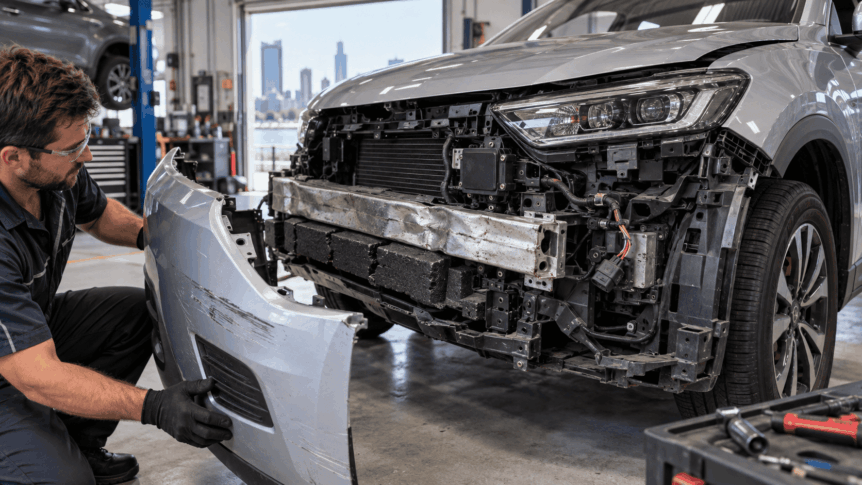
Modern cars are built to absorb impact in specific, engineered ways. Bumpers, crumple zones and mounting brackets are designed to flex or crush so the force of a collision doesn’t reach the cabin. That’s good for safety, but it also means damage often travels further into the vehicle than anything you can see from the outside — even in a knock that looks like a light scuff.
A repairer assessing the car properly has to look past the dented panel and check what sits behind and beneath it: brackets, wiring looms, the radiator support, and in some cases the chassis or subframe itself.
What’s commonly hiding under the surface
Structural and chassis damage
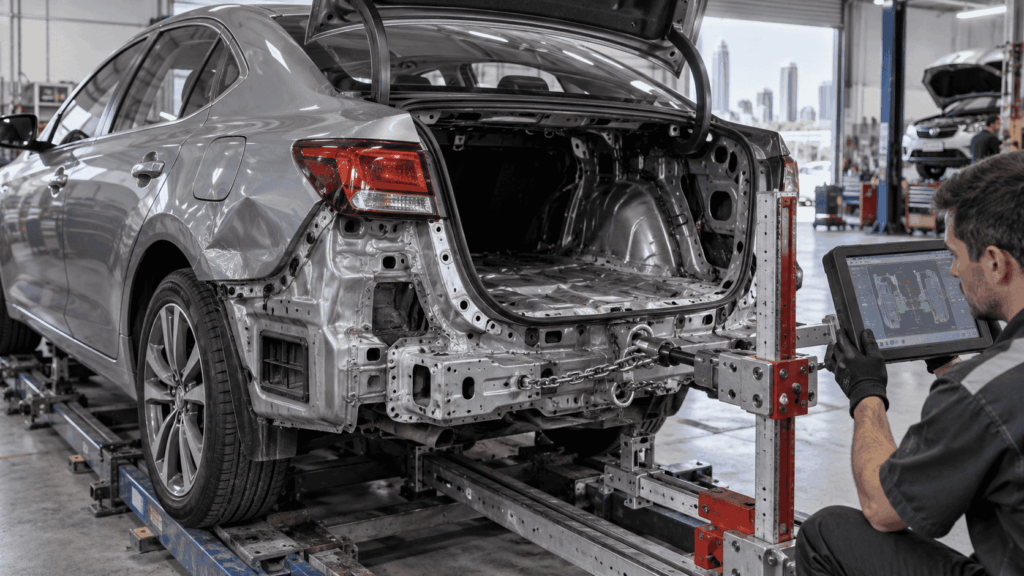
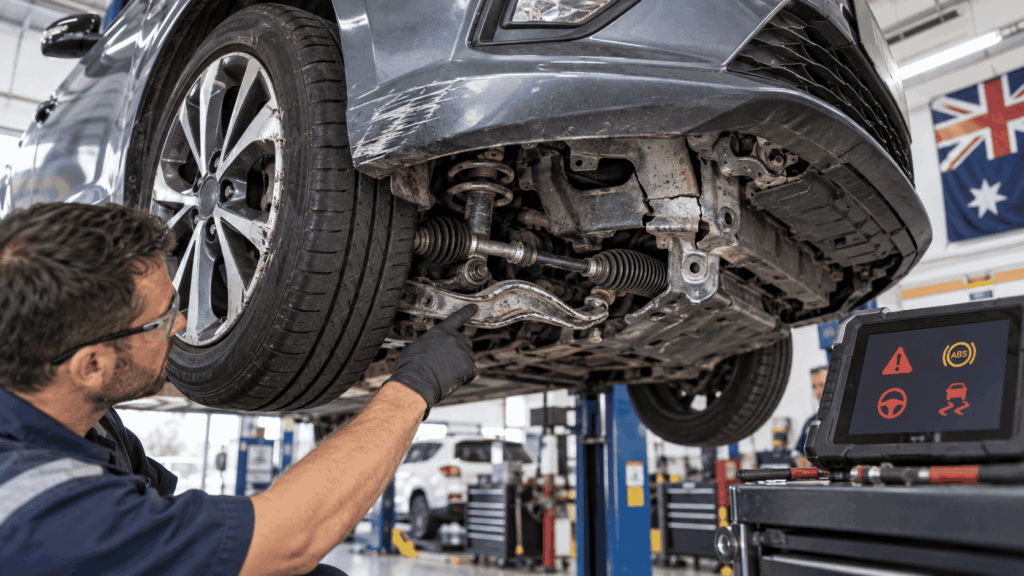
Even a low-speed impact can push a chassis rail or subframe out of alignment by a few millimetres. That’s often enough to affect wheel alignment, tyre wear and the way the car tracks down the road, and it usually can’t be spotted without putting the car on a hoist or running a proper alignment check. Significant structural damage also has to be repaired and signed off before the car can safely go back on the road.
Sensors and electronics
Late-model cars carry a growing number of sensors behind the bumpers and around the cabin — parking sensors, radar for adaptive cruise control, cameras for lane-keep assist. A bumper pushed in even slightly can knock these out of calibration or damage the connectors feeding them. Recalibrating the safety systems on a late-model Kia or a European car after a repair takes specialised equipment, and it’s a cost most owners don’t see coming.
Mechanical and cooling system damage
Front-end knocks are notorious for this. The radiator, air-conditioning condenser and the coolant and intercooler lines are often stacked directly behind the bumper. A hit that barely marks the paint can still crack a radiator or split a hose, and the car may drive normally for days or weeks before it starts to overheat.
Paint matching and panel blending
On a car with any age or sun fading, matching fresh paint to the surrounding panels usually means blending into the adjacent panels too, not just spraying the one that was damaged. That widens the job and the labour hours attached to it.
Why the quote keeps growing once the repairer looks closer
Most quotes start as an estimate based on what’s visible. Once the panel comes off and the repairer can see the mounting points, wiring and structural members underneath, the scope of the work tends to grow rather than shrink. Genuine parts for newer vehicles can be back-ordered or expensive, labour rates reflect specialised skills like recalibration, and any rust or earlier repairs uncovered along the way get added to the bill too.
For an older car, this is often the point where the sums stop adding up. Once the repair bill approaches what the car would be worth fixed, owners are really weighing up whether repairing or replacing the car is the smarter move.
Signs it might be time to sell rather than repair
- The repair quote is close to, or more than, the car’s market value
- There’s chassis, subframe or other structural damage
- The car has already been written off by an insurer
- Parts are hard to source, or the wait stretches into months
- You were already planning to replace the car anyway
Selling a damaged car in WA — what to check first
If you decide to sell rather than repair, a few WA-specific details are worth knowing before the car leaves your driveway.
- Standard plates normally stay with the car. In WA, general-issue state or district plates stay on the vehicle and pass to the new owner. If you want to keep them, you have to remove them before the sale and arrange replacement plates through the Department of Transport. If the car is going to a licensed wrecker as a write-off, its licence is cancelled once it’s recorded as written off, so it’s common to take the plates off and hand them back at a DoT centre — any unused licence fee may be refunded.
- You need to notify the change of ownership. After you sell, lodge a Notification of Change of Ownership – Vehicle Licence Transfer (MR9) with the Department of Transport within 7 days, recording the buyer’s name and address. Failure to do so will result in a penalty being applied.
- Have photo ID on hand. Whoever hands the car over needs valid photo identification at collection. It doesn’t have to be the registered owner, but someone with ID needs to be there.
Most buyers also won’t take a car that’s stolen, still under finance, or stripped back to a shell with no chassis, so it’s worth checking where you stand on all three before ringing around.
Frequently asked questions
Can I keep driving a car with hidden accident damage?
If the car drives and stops normally it may seem fine, but hidden structural or cooling damage can worsen with use — a cracked radiator that leads to overheating, or an alignment problem that wears tyres unevenly. Have it inspected before you rely on it for anything more than a short trip.
Will my insurer pay for damage found after the repair starts?
Often yes, if it relates to the same accident. Reputable repairers lodge a supplementary claim when they uncover extra damage once the panel is off, and your insurer may send an assessor back to inspect it. Damage unrelated to the accident, or pre-existing wear and rust, generally isn’t covered.
How do I know if the damage is structural?
You usually can’t tell by eye. A repairer will put the car on a hoist and measure key points against the manufacturer’s specifications, or run a chassis alignment check. Uneven panel gaps, doors that don’t shut cleanly, or the car pulling to one side after a knock are all reasons to get it measured.
Do I need a roadworthy certificate to sell a damaged car in WA?
Not to sell it to a licensed wrecker or car removal service. A roadworthy or inspection matters when a vehicle is being re-licensed or transferred for road use, not when it’s being sold for dismantling or repair.
Is a repairable write-off worth buying back and fixing?
Sometimes, but it has to pass the required write-off inspections before it can be licensed again, and the write-off stays on the car’s history permanently, which affects resale. Get the full inspection and repair cost in writing before deciding.
The bottom line
A minor accident is rarely as minor as the first look suggests, and the only way to know what you’re dealing with is a proper inspection that checks behind the panels. Once you have a repair figure, compare it honestly against what the car is worth and what you were planning to do with it anyway.
If the numbers point to selling, Cash for Cars Perth buys accident-damaged and written-off cars in any condition and can discuss collection from East Cannington and dismantling at its licensed yard in Welshpool. For a quote based on your car’s details, call 0420 262 651.