


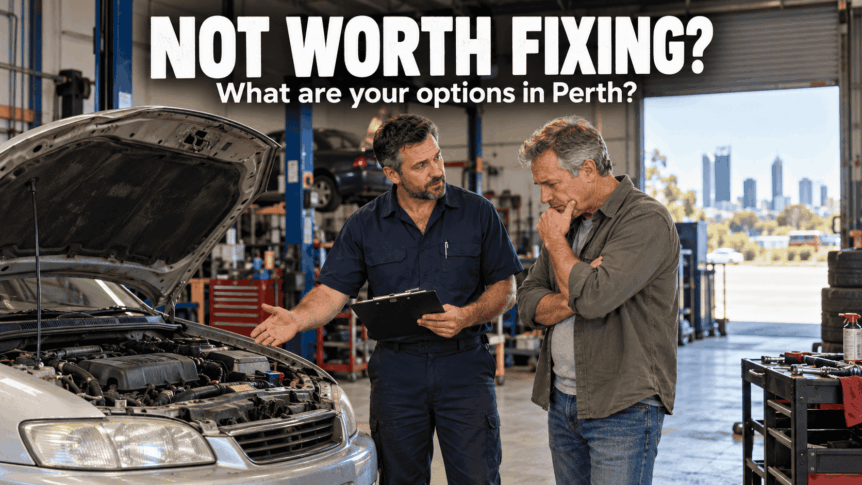
Hearing your mechanic say a repair “isn’t worth it” catches most car owners off guard. The car got you to the workshop, and now you’re being told the fix costs more than the car is worth. If this has just happened to you in Perth, here’s a practical look at what that verdict means and what your realistic options are.
What Does “Not Worth Fixing” Actually Mean?
Mechanics usually reach this conclusion by comparing the repair quote to the car’s current market value – not its sentimental value or what you paid for it years ago. A $2,500 gearbox rebuild on a car worth $2,000 on a good day is a straightforward case. It’s more common with older vehicles or cars that have had a run of expensive issues in a short space of time, where one more major repair tips the balance. It doesn’t always mean the car is dangerous or completely dead – sometimes it still drives, sometimes it doesn’t start at all. Either way, the maths on fixing it properly just doesn’t stack up.
Your Main Options From Here
1. Get a second quote
Before deciding anything, it’s reasonable to get a second opinion, particularly for bigger jobs like engine or transmission replacements. Quotes can vary between workshops, and a second mechanic might suggest a cheaper repair path if the first quote assumed a full replacement.
2. Sell it privately
You can list it online as-is. This sometimes gets a slightly higher price than other routes, but it comes with friction: buyers want to test-drive a working car, a non-running vehicle scares off most private buyers, and you’re responsible for organising a roadworthy certificate if the buyer needs one. It can drag on for weeks, which isn’t ideal if the car is taking up space.
3. Trade it in
If you’re replacing the car anyway, a dealer trade-in is convenient, but dealers typically undervalue older, damaged, or non-running vehicles – they’ll usually just move the car on to a wrecker themselves and price the trade-in accordingly.
4. Sell to a car removal or wrecking company
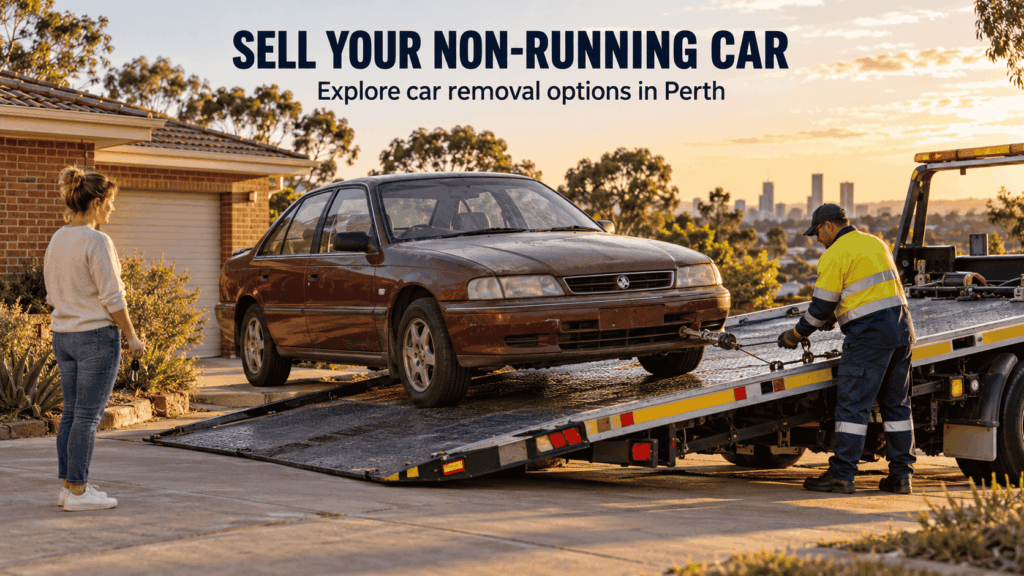
This is generally the simplest route once a car is no longer worth repairing. A licensed wrecking yard will buy the vehicle in whatever state it’s in – running, not running, accident-damaged, or written off – strip it for usable parts and scrap metal, and handle the paperwork side. Cash For Cars Perth, for example, pays up to $9,999 depending on the vehicle, and can usually organise free towing the same day, often within two to three hours if you call before midday.
What Actually Affects the Offer
- Make and model – some vehicles have stronger demand for used parts than others
- Age and completeness – a car with the engine, gearbox, and other major components intact is worth more than one that’s already been picked over
- Condition – whether it runs, the extent of accident or fire/flood damage, and general wear
- Weight and metal content – heavier vehicles like utes, vans, and 4WDs generally yield more scrap value than small hatchbacks
- Current scrap metal prices – these fluctuate, so it’s worth getting an up-to-date quote rather than relying on last year’s figure.
A car missing its chassis, or one that’s still under finance or reported stolen, generally can’t be purchased by a licensed wrecker until that’s sorted out first.
What to Expect on Sale Day
The process is usually straightforward. You describe the car’s condition over the phone, get a quote, and if you accept, a tow truck is booked in – often the same day. You’ll need valid photo ID on hand (you don’t have to be the registered owner, but you do need to show who you are). Payment, whether cash or an instant OSKO transfer, is handed over before the car leaves your property, not after.
Two WA Rules Worth Knowing
- Number plates stay with you. In WA, plates are registered to the person, not the vehicle, so remove them before the car is towed. They can be transferred to another car you own or returned to the Department of Transport.
- Lodge a Notification of Disposal. After selling, you’re required to notify the WA Department of Transport that the vehicle has changed hands. Skipping this can leave you linked to the car for unpaid fines or future infringements, even though you no longer own it.
A Few Common Questions
Does the car need to be registered or roadworthy?
No. Deregistered, unregistered, and written-off vehicles are all routinely bought by wrecking yards.
What if it doesn’t start?
That’s fine – non-running cars are one of the most common types of vehicle removal companies deal with, and towing is arranged for you.
Do they come to me, or do I drop it off?
Reputable removal services come to you anywhere in the Perth metro area. If you’re further south, check coverage first – Cash For Cars Perth, for instance, services Perth metro but doesn’t operate down as far as Bunbury.
If You’ve Decided the Repair Isn’t Worth It
Once a mechanic has ruled a repair out, there’s not much upside in letting the car sit. Cash For Cars Perth operates out of a licensed wrecking yard at 5 Hantke Place, Welshpool, open Monday to Saturday, 7:30 AM to 6:00 PM, and can give you a quote over the phone and arrange same-day towing across the Perth metro area. Call 0420 262 651 for a free, no-obligation quote.