


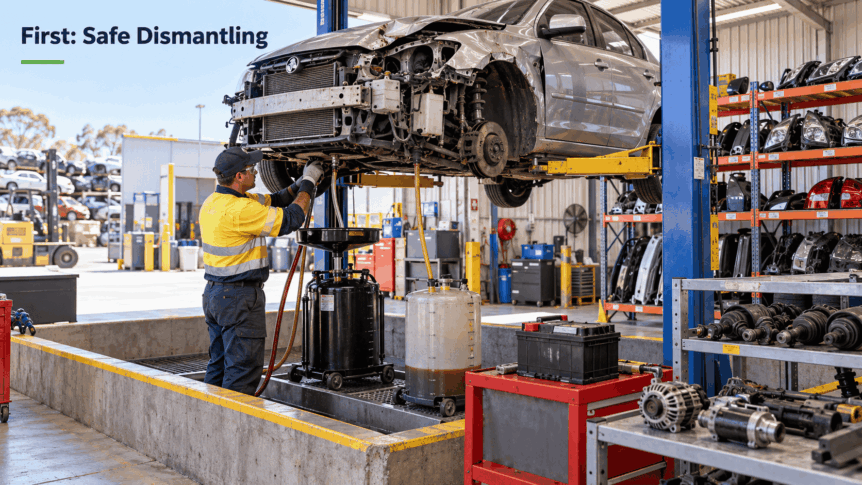
When a car is too old, too damaged, or too expensive to fix, most Perth owners just want it gone. What happens to it after that – where the metal actually goes – is something fewer people think about. It turns out there’s a fairly established process behind it, and understanding it can help you make sense of what a wrecking yard is actually paying you for.
It Starts With Removing Anything That Isn’t Metal
Before a car gets anywhere near a crusher, it has to be depolluted. This means draining and safely disposing of fluids such as engine oil, transmission fluid, coolant, brake fluid, fuel, and refrigerant from the air-conditioning system. The battery, tyres, and airbags are also removed at this stage. This isn’t optional – a licensed wrecking yard has to handle these separately, because letting them go through with the metal would contaminate the recycling stream and, in the case of things like fuel or coolant, create an environmental hazard.
Parts Worth Keeping Get Pulled First
Once a vehicle is depolluted, dismantlers go through it for anything reusable – alternators, starter motors, gearboxes, doors, panels, wiring looms, and any other components still in good enough condition to be resold as second-hand parts. This is a large part of how a wrecking yard recovers value from a car, particularly one that’s running or only lightly damaged. A vehicle that’s a common make and model, with parts that are in demand, will generally yield more usable components than a rare or heavily damaged one.
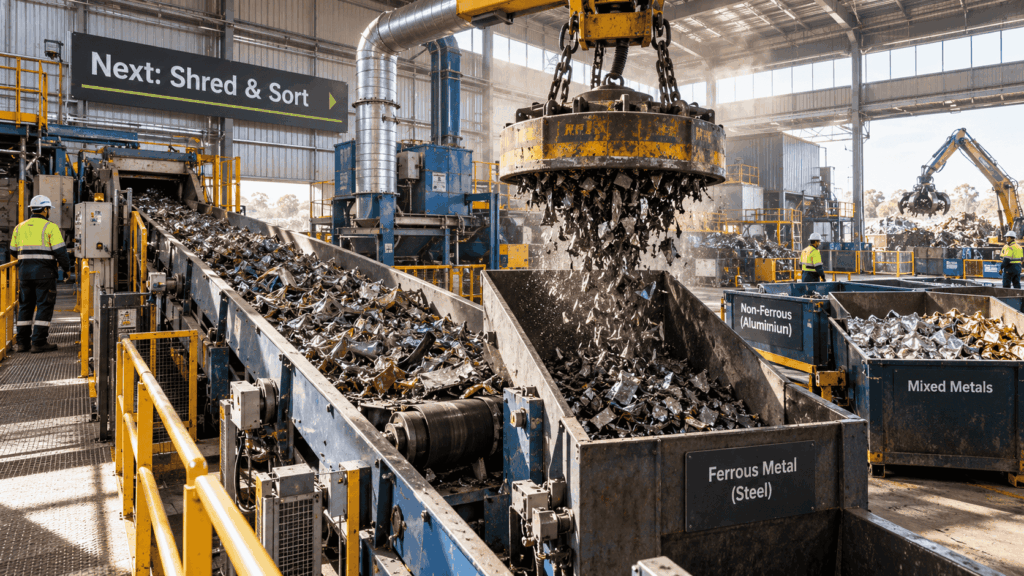
What’s Left Is Crushed and Shredded
After the useful parts are stripped out, what remains – the body shell, chassis, and any metal components not worth keeping intact – is flattened and sent to be shredded. Industrial shredders break the vehicle down into fist-sized pieces of scrap. From there, magnets and other separation equipment sort the ferrous metal (steel and iron) from non-ferrous metal (aluminium, copper, and so on), since each is sold into different markets.
Where the Metal Actually Ends Up
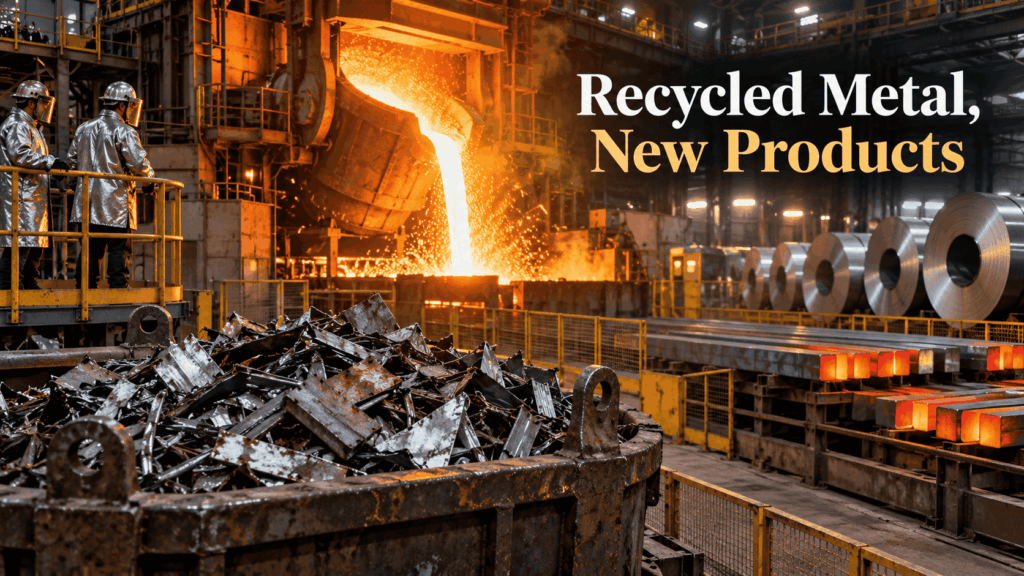
The sorted scrap is sold to metal recyclers and, from there, typically melted down and used to make new steel and aluminium products. Some of it stays within Australia; a portion is also exported as scrap. Either way, the steel from an old Commodore or Hilux doesn’t just disappear – it re-enters the supply chain as raw material for new manufacturing, which is a large part of why wrecking yards can afford to pay for end-of-life vehicles in the first place. Current scrap metal prices fluctuate with global demand, so exact figures vary.
What Affects How Much a Wrecked Car Is Worth
Not every vehicle is worth the same to a wrecking yard, and a few factors tend to matter most:
- Weight and metal content – heavier vehicles like utes, vans, and 4WDs generally contain more recoverable metal than small hatchbacks.
- Reusable parts – a car that still has a working engine, gearbox, or in-demand panels is worth more than a burnt-out shell.
- Make and model – popular models with strong demand for second-hand parts tend to fetch more.
- Completeness – a vehicle with major components already missing (engine pulled, no chassis) is worth less, and in some cases won’t be accepted at all.
- Condition – running, non-running, accident-damaged, flood or fire-damaged, deregistered, and even written-off vehicles can all still hold value, though the amount will differ case by case.
WA Rules You Need to Know Before You Sell
Your Number Plates Stay With You
In Western Australia, number plates are attached to the registered operator, not the vehicle. When you sell a car for wrecking, the plates come off and stay with you – they don’t go with the car to the yard. What you do with them afterwards (transfer to another vehicle or return them) is up to you.
Lodging a Notification of Disposal
Once you’ve sold or disposed of a vehicle, WA law requires you to lodge a Notification of Disposal with the Department of Transport. This formally records that you’re no longer responsible for the vehicle, which matters if it’s ever linked to unpaid fines, a change of ownership dispute, or anything else down the track. It’s a simple step but an easy one to forget once the car’s already gone.
What You’ll Need on the Day
Selling to a licensed wrecker is generally straightforward, but there are a few things worth having ready:
- Valid photo ID (you don’t need to be the registered owner, but you’ll need identification)
- The vehicle itself, in whatever condition it’s in
- Any spare keys, if you have them
Worth noting: reputable wreckers won’t buy stolen vehicles, cars still under finance, or bodies without a chassis. If any of these apply to your car, it’s worth sorting out beforehand.
Getting Your Car Removed
Cash For Cars Perth is a licensed wrecking yard based at 5 Hantke Place, Welshpool, and covers the entire Perth metro area (we don’t service Bunbury or further south). We buy cars, utes, trucks, vans, and 4WDs in any condition – running or not, accident-damaged, deregistered, or written-off – and pay up to $9,999 in cash or instant OSKO transfer before the vehicle leaves your property. Towing is free, and if you call before midday, same-day pickup is often available within 2–3 hours.
If you’ve got a car taking up space and you’re curious what it’s worth, call 0420 262 651 for a quote. We’re open Monday to Saturday, 7:30 AM to 6:00 PM.