


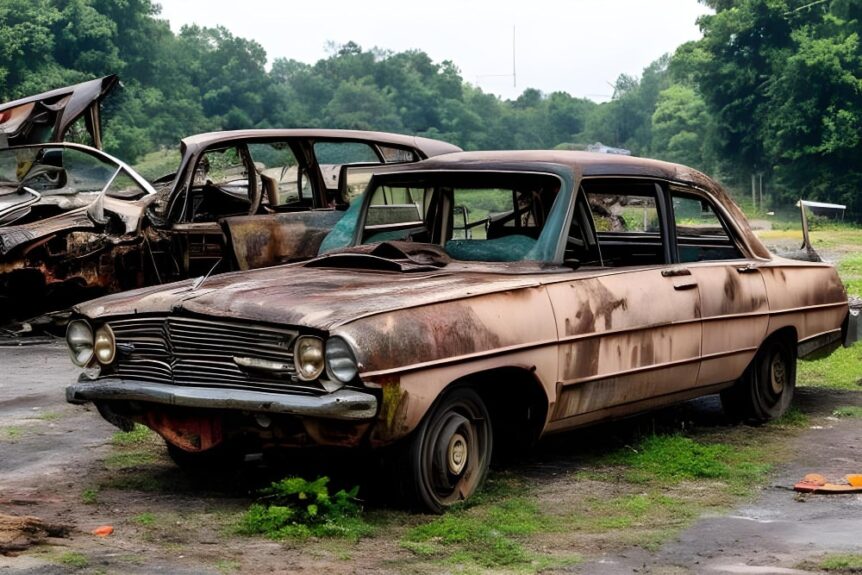
If your car is old, tired, or sitting on the verge with a flat battery, you have probably wondered whether to sell it or send it to a wrecker. It is one of the most common questions Perth car owners ask us, and the honest answer depends less on what you would like to get for it than on what the car actually is. A car someone else would happily drive is worth selling. A car that is only worth its parts and metal is usually better off going straight to a scrap buyer. This guide covers how to tell which one you have, what each path is worth, the paperwork, and what scrapping actually involves.
Is your car worth selling, or is it past that?
Start with an honest look at the car itself, not the value you have carried in your head since you bought it.
A car is generally still worth selling if it starts, drives, stops and steers safely, it has current licensing or would pass a roadworthy inspection without major work, there is no structural rust or chassis damage, the engine and transmission are sound, and any repairs it needs are cheap next to what it would sell for.
It has usually crossed into scrap territory if it does not run, or would cost more to fix than it would then be worth; it would fail a roadworthy on safety items; it has heavy rust, flood or accident damage; an insurer has already written it off; or its panels, parts and metal are all that is left of value.
Plenty of cars sit in the middle: they run, but they need a timing belt, a clutch or a windscreen, and you are weighing that bill against a modest sale price. Here is the test that works. Would a private buyer need the same repair done before they trusted the car? If so, you are really selling them a project, and most people will not pay much for one. The gap between a private sale and a wrecker’s offer is often smaller than you expect.
What each path is worth
The two paths answer different questions.
Selling prices the car as transport: make, model, age, kilometres, service history, condition, and how many similar cars are on the market right now. Buyers pay for a car they can get in and drive away, so a tidy, well-documented used car in a common model holds its value far better than a rare or unloved one, and a full service history can be worth more than any single repair you might do.
Scrapping prices the car as materials and salvage. The metal has a value, but the bigger number is usually which parts can be pulled, tested and resold, which is why two cars of the same age and weight can be worth very different amounts.
A Subaru Forester or Outback with a sound engine and gearbox, straight doors and working electronics is worth more to a wrecker than an obscure import the same size, because the parts sell. Age and kilometres matter far less here than on the selling path. One rule holds either way: be wary of any firm figure quoted before someone has seen the car. Every vehicle is different, so have yours priced on the actual details and confirmed before it changes hands.
How much time and effort each path takes
Selling privately is the slower road: writing the ad, fielding messages and tyre-kickers, being home for inspections and test drives, haggling, then sorting the transfer. That can take a weekend or several months. A dealer trade-in is quicker, but the offer reflects the convenience.
Scrapping, or selling to a car removal service, is built around one phone call: you give the details, you get a price, and if you accept, the car is collected, often the same day, with the paperwork done at pickup. If the car is unregistered, undrivable or in the way, trading a possible higher sale for that speed is usually worth it. If it is genuinely desirable and you can wait for the right buyer, selling privately will normally put more in your pocket.
The paperwork, either way
Whichever path you pick, the licensing side is yours to sort out, not the buyer’s and not the wrecker’s.
When you dispose of a vehicle in WA, whether sold, traded in or scrapped, you must tell the Department of Transport within 7 days of ceasing to be the owner. The form is the Notification of Change of Ownership – Vehicle Licence Transfer (MR9), and you need the buyer’s or yard’s name and address to complete it. Transport WA puts it bluntly: “failure to do so will result in a penalty being applied.” Standard WA number plates stay with the vehicle and pass to the new owner; if you have personalised or optional plates you want to keep, remove them and arrange replacements at a DTMI service centre first.
One case changes the picture. If an insurer has already declared your car a write-off, it is on the Written-Off Vehicle Register. A statutory write-off “can never be re-licensed or driven on the road again” and may only be sold for parts or scrap. A repairable write-off can be sold on, but the next owner takes on a two-stage inspection before it goes back on the road. Either way, that history stays attached to the car.
What scrapping actually involves
If you land on scrapping, this is what happens to the car. A licensed yard first drains and captures the fluids, battery, gas and other hazardous material, a step called de-pollution that is a legal requirement. Parts that pass testing are removed and resold as used spares, and what is left is flattened and sent for metal recycling. It is a regulated process, which is part of why a proper operator can pay you for a car that a tip would charge you to drop off.
A few simple steps before you call can lift what a wrecker offers, and our guide to increasing your scrap car’s value runs through them.
At a minimum, clear out any personal belongings, have the licensing details on hand, and note any aftermarket extras you fitted.
Collection is the easy part. Whether you are in Thornlie or closer to the coast, a removal service brings a tow truck to your address and hands over payment and paperwork on the spot. There is no charge for the tow, and a car that does not run or is unlicensed is fine as long as the truck can reach it.
Frequently Asked Questions
Is it better to sell my car privately or scrap it?
If the car runs safely, has current licensing or would pass a roadworthy, and needs no major repairs, selling privately almost always returns more. If it does not run, would fail on safety, or needs repairs worth more than the car, scrapping is usually the better call once you value your time.
How do I know if my car is only worth its scrap value?
Ask whether a private buyer would need the same repairs done before they trusted the car. If yes, you are selling a project, and projects sell for very little. Once the repair bill nears what the car would fetch, its value is in its parts and metal.
Do I need a roadworthy inspection to scrap my car?
No. A roadworthy inspection is required when a vehicle is first licensed in WA, brought in from interstate, or relicensed after more than three months unlicensed, not to sell a car for parts or scrap.
What paperwork do I do after selling or scrapping a car in WA?
Lodge a Notification of Change of Ownership – Vehicle Licence Transfer (MR9) with the Department of Transport within 7 days, recording the buyer’s or yard’s name and address. Remove personalised plates first if you want to keep them; standard plates stay with the car.
Can I scrap a car that is not registered or does not run?
Yes. An unlicensed or non-running car can still be collected and still has value in its parts and metal. You need to be the registered owner, or have the owner’s authority, and provide identification.
Still not sure which way to go? Cash for Cars Perth handles both, a straight purchase if the car still has life left in it, or removal and recycling if it does not. Call 0420 262 651 with the details and we will talk it through and price it honestly.